




One of the first TV remotes changed the channel with sound.
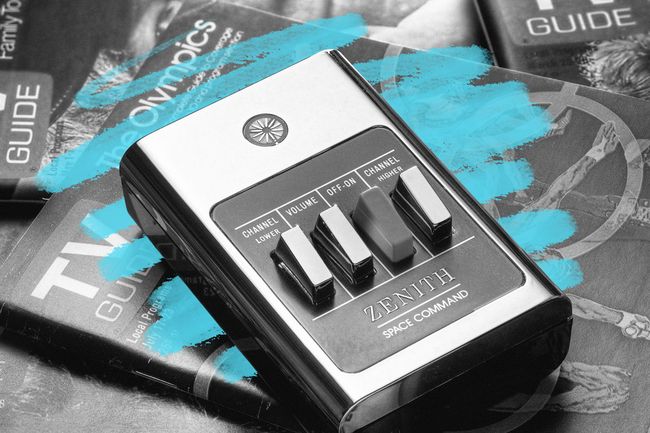
Changing the channel is easier than ever these days: You can use any number of newfangled remotes, some of which are on your phone and others that are controlled by voice. Back when your parents or grandparents had to walk uphill both ways to school, however, the clicker worked differently: with sound.
Following a series of inconvenient, highly expensive predecessors, Zenith introduced its Space Command remote control in 1956. With an appropriately futuristic look and just four buttons — “channel lower,” “volume,” “off-on,” and “channel higher” — it operated via tiny hammers hitting aluminum rods that rang at different frequencies corresponding with the command. Pressing those heavy buttons produced a clicking sound, hence the nickname, and triggered a response from small, specialized microphones inside the television.
Space Command didn’t require batteries or any kind of charging, as it was entirely mechanical rather than electronic. Zenith marketed the device with slogans such as “Nothing between you and the set but space!” and “Is it magic? It’s like nothing you have ever seen before — anywhere!”
The sounds produced by the Space Command hammers were too high a frequency for human ears to sense, though cats and dogs could hear them. The remote’s main design flaw was that high-pitched sounds from other sources (even jingling keys) could inadvertently change the channel or lower the volume. Even so, ultrasound remotes remained popular until the 1980s, when they were replaced by infrared remotes.


