




Early cars came with a vase for flowers.
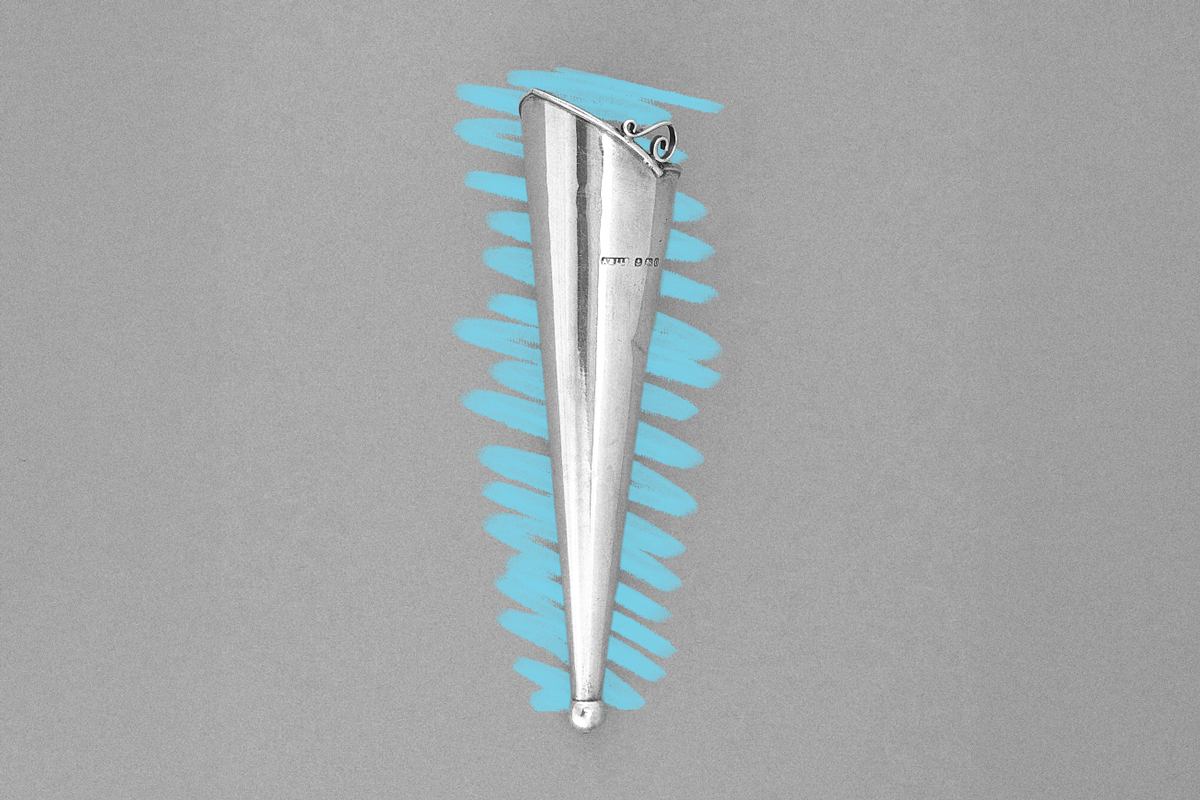
Imagine riding in a car in the 1920s. There was no air conditioning, the smell of auto exhaust was overwhelming, and the modern air freshener hadn’t been invented yet. Fortunately, many early automobiles had a pretty, fragrant feature: flower vases mounted to either the dashboard or the passenger-side window.
Automotive vases date back to at least the late 19th century and emerged in the United States by 1909, when Ward’s Automobile Topics noted that limousines on New York City’s ritzy Fifth Avenue had adopted the “Parisian notion.” In 1913, Popular Mechanics also credited France with the origin of the trend and published a perhaps-apocryphal origin story of a French automobile manufacturer that appeased an impatient American customer by adding a bouquet holder.
These vases came in all kinds of materials and designs, from sterling silver to glowing uranium glass. Some had brackets for mounting, while others included chains for hanging. Initially, they were a luxury item, but by the 1920s they were more accessible to the average consumer. Aftermarket models were widely available in jewelry stores or the Sears catalog. And Henry Ford was so taken with them that he even added them to his assembly line.
Today, dashboard flowers are more widely associated with Volkswagen vehicles, although the manufacturer didn’t start offering them as an option until the 1950s (a tradition that continued into the 1970s). When the company rebooted the VW Beetle in 1998, one of its many quirky vintage touches was an acrylic vase in the dash.


