


Christmas lights were invented as a publicity stunt.
Thomas Edison is known as one of history’s greatest inventors, but he was also a master of marketing. In 1879, Edison’s incandescent bulb was still in its infancy, but the inventor was already vying to bring electricity to the public. In December that year, he made a display of electric lights at his laboratory in Menlo Park, New Jersey, illuminating the property with dozens of his new electric bulbs and inviting the public and press to see. Thousands of people visited the display that winter, dazzled by what the bright future held.
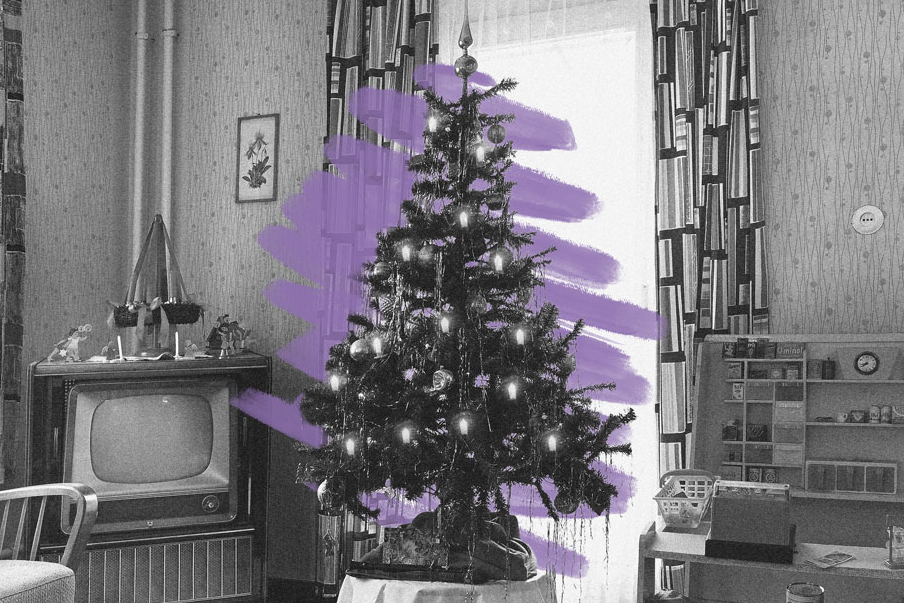
Electricity remained a rarity for most people for several years after that; lighting homes still required open flames, including the precarious use of candles on Christmas trees. But three years after Edison’s first light display, Edward H. Johnson, vice president of the Edison Electric Light Company, gave the public another glimpse of possibility. He wired up a Christmas tree by the window in the parlor of his New York City home with red, white, and blue incandescent bulbs, the first electric Christmas tree lights.
At first, electric Christmas lights were far too expensive and impractical for most families. Early sets had to be custom wired by electricians, a job that cost around $2,000 in today’s dollars. But Johnson’s stunt drew plenty of attention, just as he and Edison hoped. “I need not tell you that the scintillating evergreen was a pretty sight — one can hardly imagine anything prettier,” the Detroit Post and Tribune raved.
General Electric began manufacturing preassembled string lights at the turn of the 20th century, and by the mid-1900s, electric Christmas lights had shifted from a luxury to a beloved seasonal tradition.


