




The first woman to circumnavigate the globe was disguised as a man.
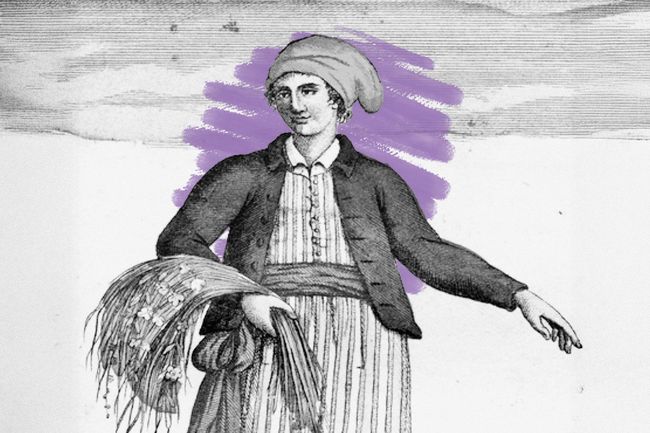
When French explorer Louis-Antoine de Bougainville set sail on the first French voyage around the world in 1766, one member of the crew wasn’t supposed to be there.
French naval regulations prohibited women from sailing aboard navy ships, but botanist Philibert Commerson was determined to bring along the talented young woman who had been helping in his work, and, since the death of his wife a few years earlier, with whom he had a romantic relationship. Thus, Jeanne Baret, born to a poor family in Burgundy in 1740, became “Jean” Baret and boarded the expedition disguised as Commerson’s male valet.
The deception reportedly worked for more than a year, although there were apparently some suspicions about Baret’s unusually voluminous clothes, hairless chin, and refusal to wash in public. Baret accompanied the often-ailing Commerson on collecting trips around the world, carrying heavy scientific equipment and gathering plants in one of the great botanical expeditions of the 18th century. Some historians think it’s likely that Baret was the first to collect specimens of the vividly colored flowering vine later named bougainvillea, after the expedition’s commander.
Eventually, Baret’s gender was discovered during the voyage, although historians disagree about exactly how and where it happened. (According to Bougainville’s journal, it was the Indigenous people of Tahiti who figured out Baret was a woman the moment she was rowed ashore.) Despite the revelation, she continued traveling with the expedition for several months, before later completing her journey back to France by a different route.
When she finally arrived home, Baret had accomplished something unprecedented: She had become the first woman known to circumnavigate the globe. Although her scientific contributions were long overshadowed by Commerson’s, historians today increasingly recognize that she was not simply an assistant but a skilled botanist whose work helped expand Europe’s understanding of the natural world — something almost unthinkable for someone of her class and gender at the time.


