


How Did Victorian Women Get Dressed?

  • Dresses with crinolines, 1850
Dresses with crinolines, 1850
Credit: Heritage Images/ Hulton Archive via Getty Images
Author Nicole Villeneuve

May 27, 2025

Love it?

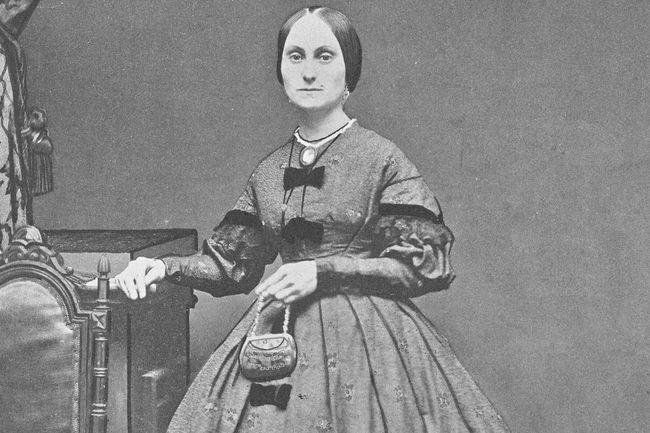
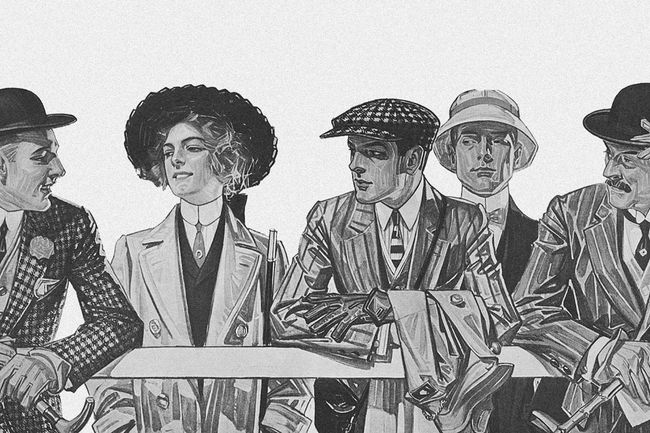
Victorian fashion, like many aspects of British society during Queen Victoria’s reign, was defined by order, structure, and formality. Though styles evolved throughout the decades, from the voluminous bell skirts of the 1850s to the bustle-heavy silhouettes of the 1880s, some fundamentals remained consistent — namely, the numerous layers that made up a women’s daily garb. It makes you wonder: Just how long did it take Victorian women to get dressed? And how were they able to manage the various tasks of daily life — to say nothing of simply sitting down — while wearing such cumbersome attire?

Credit: Bettmann via Getty Images 

The dressing process typically began with undergarments. These included drawers, which in the 19th century consisted of two entirely separate legs joined only at the waistband; a chemise (also known as a shift), a loose underdress typically made of cotton or linen to protect the outer garments from sweat and protect the skin from the corset; and stockings held up by ribbon garters or, later in the 19th century, clips. Shoes — often boots — were also put on at this stage of getting dressed, because once the corset and other garments went on, it became a trickier task.

Corsets were, of course, central to the Victorian silhouette, cinching the waist to emphasize the bust and hips. Early corsets laced up the back using a single long lace threaded through hand-stitched holes, which wore out easily and had to be completely unlaced and re-laced each time. That began to change in 1828 with the invention of metal eyelets, which allowed tighter lacing without damaging the fabric. 

Then in the 1850s, the slot-and-stud front-opening busk became more common. With studs on one side and matching slots on the other, women could fasten the corset while keeping the back lacing mostly in place, loosening it enough just to fasten it in the front. The corset could then be slipped on, hooked closed in the front, and then tightened by reaching behind and pulling — no need to step into it or rethread the laces daily.

You may also like

7 Major Historical Events That Happened in June

  • Sally Ride in space, 1983
Sally Ride in space, 1983
Credit: dpa picture alliance archive/ Alamy Stock Photo
Author Timothy Ott

May 22, 2025

Love it?

For those who live in the Northern Hemisphere, there’s something about the culmination of ever-warming weather, the full ripening of foliage, and the seemingly endless daylight hours that makes June a magical time of year. And while many of us harbor fond recollections of beachfront jaunts or backyard games that took place as spring swept into summer, June also comes with a collective well of memories that transpired within its 30-day span.

Here are seven historical events from Junes of both recent vintage and centuries past. From crucial battles to transformative treaties and political scandals, each has stood the test of time as a major checkpoint of the shared human experience.

Credit: Rischgitz/ Hulton Royals Collection via Getty Images 

June 15, 1215: King John Affixes His Seal to the Magna Carta

King John’s ascent to the English throne in 1199 seemingly brought nothing but trouble for the monarch, who subsequently lost control of several French territories, was excommunicated by Pope Innocent III, and faced an uprising from powerful barons who chafed at high taxes. Seeking to at least pacify the barons, John agreed to a series of terms that provided specific limits on the king’s power over matters of land ownership, debts, and the election of church officials, signing the agreement on June 15, 1215. 

Although peace between the two sides was short-lived, the charter was revised and reissued multiple times over the years, and the 1225 version of what is now known as the Magna Carta is recognized as the definitive issue. And while it was never intended to define the course of human rights beyond the immediate feudal concerns, the document did exactly that with its clauses that guaranteed basic liberties and justice for citizens, words that later influenced the United States Declaration of Independence and Constitution.

You may also like

What Was the Bronze Age Like?

  • Bronze Age metalwork
Bronze Age metalwork
Credit: Chronicle/ Alamy Stock Photo
Author Nicole Villeneuve

May 15, 2025

Love it?

The Bronze Age was a period of extraordinary transformation that unfolded across many parts of the world between roughly 3300 and 1200 BCE. During this time, people mastered the process of smelting copper and tin into bronze, a durable metal that reshaped how humans farmed, fought, and built. 

Like the Stone Age that came before it and the Iron Age that followed, the Bronze Age marked a major stage in the evolution of civilization. But it wasn’t defined by metallurgy alone: It was also a time of urbanization and cultural advancements. Civilizations in Mesopotamia, the Indus Valley, Egypt, and the area around the Aegean Sea built cities, formed governments, and established trade networks. This interconnection led to an exchange of ideas that laid the foundation for the ancient world and beyond. Here’s a glimpse at how the Bronze Age shaped human society.

Credit: Zev Radovan/ Alamy Stock Photo

There Were Groundbreaking Innovations

The development of bronze was so impactful it gave the era its name. Indeed the newly smelted metal tools and weapons were stronger and more durable than stone, and they could be cast, hammered, and sharpened as needed. But the period saw a wave of other inventions that changed how people lived, worked, and traveled. The groundbreaking discovery of the wheel came into widespread use during the Bronze Age, particularly after the invention of the spoked wheel around 2000 BCE, which allowed for smoother and more reliable transportation. 

The first complex writing systems also emerged in several regions during this era. In Mesopotamia, beginning around 3500 BCE, Sumerian scribes used cuneiform script on clay tablets to track trade, property, and taxes; it remains the world’s oldest known writing system. Around the same time, in Egypt, hieroglyphs recorded religious and royal texts. Other innovations that appeared during the Bronze Age include swords, rope, and early forms of soap

You may also like

Why Do Old Towns Have Clock Towers?

  • Big Ben, London, circa 1928
Big Ben, London, circa 1928
Credit: Universal History Archive/ Universal Images Group via Getty Images
Author Kristina Wright

May 8, 2025

Love it?

Strolling through an old European city or colonial American village, one structure often draws the eye before anything else: the clock tower. Often reaching high above rooftops and marketplaces, these architectural timekeepers have marked the passage of hours for centuries. While we no longer rely on them to schedule our days, their presence is more than nostalgic — it’s deeply symbolic. 

Clock towers connect us to an era when time was a shared resource, when clocks were heard on the hour (and sometimes on the half-hour and quarter-hour) and seen from nearly every corner of a town center. Today, they stand as reminders of our shared past and of the beauty in building something meant to last.
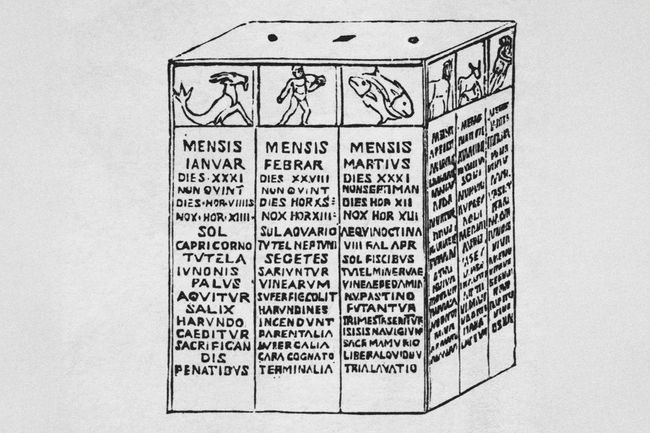
From the animated figures of Munich’s Rathaus-Glockenspiel to the precision of Kyoto’s Seiko House Ginza clock tower to the somber chimes of Big Ben echoing through Parliament Square, these landmarks remind us that time isn’t just about minutes and hours, but also about memory, identity, and connection.

Credit: Benny Marty/ Alamy Stock Photo

Clock Towers Were Built To Showcase Civic Pride 

Having a clock tower was once a mark of prestige for towns and cities. In the Middle Ages and Renaissance era, public clocks symbolized a town’s wealth, technological abilities, and political status. These structures weren’t just functional — they were an architectural flex, built to impress both residents and visitors. The Zytglogge in Bern, Switzerland, is a good example. Originally constructed in the 13th century as a guard tower, it later became a grand astronomical clock, with rotating figures and intricate dials that still attract tourists to marvel at its construction.

Meanwhile, Venice’s Torre dell’Orologio, built in the 15th century, has a blue and gold astronomical face and two bronze figures striking the bell to reflect Venetian wealth and creativity. In the Middle East, the Ottoman-era Jaffa Clock Tower in modern-day Tel Aviv was one of several clock towers built to celebrate the 25th anniversary of Sultan Abdul Hamid II’s reign. Completed in 1903, it combined European clockmaking with local limestone and became a symbol of modernization in the region.

You may also like

What a Typical Day Was Like in Ancient Egypt

  • Making papyrus in ancient Egypt
Making papyrus in ancient Egypt
Credit: Lebrecht Music & Arts/ Alamy Stock Photo
Author Kristina Wright

May 8, 2025

Love it?

Ancient Egypt has fascinated people for centuries — its towering pyramids, mysterious mummies, and richly decorated tombs have inspired everything from Hollywood blockbusters to bestselling novels. But beyond the legends and larger-than-life stories, historians now know more than ever about what everyday life was really like for the people who lived along the Nile thousands of years ago.

Thanks to archaeological finds, new technology, and ongoing research, we can piece together a surprisingly detailed picture of how ancient Egyptians worked, worshipped, and went about their daily routines. From the powerful pharaoh to the educated scribe to the hardworking laborer, every member of society had a role to play in keeping this remarkable civilization running.

So what did a typical day look like? Let’s look at three very different types of people — a ruler, a writer, and a farmer — to see what life was like in this ancient civilization.

Credit: Heritage Images/ Hulton Archive via Getty Images 

Morning

Life in ancient Egypt started early. For a farmer, the cooler hours of the early morning were the best time to get work done. After a quick breakfast — usually some coarse bread, onions, and beer — they headed to the fields. Depending on the season, they planted wheat, chickpeas, lentils, sesame, or flax; checked on their crops; or worked hard to bring in the harvest before the midday heat set in. While women might work alongside the men during harvesting, they were more likely to be in the home, tending to the household chores and caring for young children.

Things looked pretty different in the royal palace. The pharaoh’s morning was all about ceremony. Surrounded by priests and attendants, the king or queen took part in prayers and rituals to honor the gods — especially Ra, the sun god, whose rising was seen as a sign that all was right in the universe. The pharaoh didn’t exactly dress themself, either; they were bathed, perfumed, and dressed by their attendants in fine linen and gold, ready to represent divine power throughout the day.

In the city, the scribe started their day with a light breakfast of bread, dates, and beer. Then they headed to work — maybe at a temple, government office, or even a granary where they documented grain quantities. Scribes were part of a small, educated group of women and men in Egyptian society, and their writing skills were essential for keeping records, managing resources, and making sure everything ran smoothly.
You may also like

What the World Smelled Like Before Industrialization

  • Farmyard in Britain, circa 1800s
Farmyard in Britain, circa 1800s
Credit: Colin Waters/ Alamy Stock Photo
Author Bess Lovejoy

May 8, 2025

Love it?

Before the churn of factories and the tang of coal smoke came to dominate modern life during and after the Industrial Revolution, the smells of daily life were intensely organic, shaped by proximity to animals, bodies, plants, and decay. Urban and rural environments offered distinct olfactory experiences, but both were pungent, earthy, and changed with the seasons. 

Once industrialization and modern sanitation systems had taken hold in the industrialized world by the mid-1800s (following a transformation that lasted about a century), the smells of waste, sewage, manure, and other organic materials were significantly less common, even in rural areas. Changes in agriculture, the decline of small cottage industries, and advances in chemistry also pushed scents away from earthy and toward synthetic. But understanding these historical odors offers a visceral glimpse into how people once experienced the world — as they say, “the nose knows.” 

Credit: Heritage Image Partnership Ltd/ Alamy Stock Photo

What Preindustrial Cities Smelled Like

Before industrialization transformed cities in Britain and the U.S., urban areas were often crowded, unsanitary, and deeply aromatic environments. Unfortunately, some of the most dominant smells were related to waste, both human and animal.

In an era before modern plumbing, human waste flowed unchecked in waterways, pooled in cesspits, or was collected in “night soil” buckets to be used later as fertilizer. Open gutters often carried sewage and refuse, while heaps of offal and carts of dung were common sights — and smells — on city streets.

Animals were also a major contributor to the aromatic landscape, such as it was. Horses were ubiquitous in cities, and their manure (and occasional carcasses) filled the air with ammonia and other not-so-pleasant smells. In New York City there were 10,000 horses by 1835, each producing 15 to 30 pounds of manure and a quart of urine. In her book Taming Manhattan: Environmental Battles in the Antebellum City, historian Catherine McNeur describes how rotten food and dead animals mixed with “enormous piles of manure to create a stench particularly offensive” in the heat of a New York summer.

Meanwhile, in England, the River Thames served as a dumping ground for sewage, emitting overpowering odors that were also especially ripe in the summer. As in America, streets were littered with horse manure, and industries such as tanneries and slaughterhouses contributed to the pervasive foul smells.​

In fact, urban centers on both sides of the Atlantic were full of small-scale trades and markets — tanners, butchers, fishmongers — each adding their own pungency. Tanning leather required soaking hides in urine and lime, producing a rank, acrid scent. Butcher shops dumped blood and offal into gutters. In the U.S., industries such as slaughterhouses and leather tanners were called the “offensive trades” because of how they offended the nose, according to historian Melanie Kiechle.

Street vendors contributed too: Roasting chestnuts, boiling tripe, and frying fish could be welcome or foul scents, depending on your appetite and the weather.

You may also like

7 Symbols on the Dollar Bill — and What They Mean

  • Fanned out stack of $1 bills
Fanned out stack of $1 bills
Credit: H. Armstrong Roberts/ Retrofile via Getty Images
Author Timothy Ott

May 1, 2025

Love it?

For most people, the only thing that matters about cash is the value printed on each bill and the total amount filling their wallets. But folks with a sharp eye and a little more time on their hands may notice the intricate design details on the various denominations. Along with the portrait of a famous statesman, U.S. currency features a potpourri of images that range from intriguing to downright mystifying.

Perhaps no bills pack a more befuddling display into an innocuous package than the $1 note. The humble dollar bill offers a rich tapestry of symbolism for those who take the time to examine the craftsmanship a little more closely. Here are the explanations behind seven of the dollar bill’s more perplexing elements.

Credit: Chiara Sakuwa/ Alamy Stock Photo

Serial Numbers

To start with perhaps the least mysterious, the obverse (or front) of the bill features several numbers. The longer ones off to the top right and lower left of George Washington’s portrait are the serial number, with the first letter of each series identifying the Federal Reserve Bank that issued the note. That same letter appears in the middle of the Federal Reserve District seal, to the left of Washington, and also corresponds to the four numbers located near the number “1” at each of the four corners. For example, the Second Federal Reserve District is New York, so a $1 bill from that district would have a prominent “B” within the Federal Reserve District seal and at the front of the two serial numbers, as well as the number “2” near each of the four corners.”

You may also like

What Grocery Stores Used To Look Like

  • 1890s general store
1890s general store
Credit: Bettmann via Getty Images
Author Timothy Ott

May 1, 2025

Love it?

Since most of us walk into a grocery store with our minds fixated on the items needed to fill up the fridge and pantry, it’s rare that we take the time to marvel at the wonders of modern food shopping. Whether it’s a small neighborhood mart, a chain supermarket, or a gargantuan superstore, today’s grocery stores offer a dizzying range of brands for any given product, allowing discerning shoppers to make a choice based on price, ingredients, or even packaging. All necessary (and unnecessary items) can be wheeled in a cart to a checkout line, where a friendly employee will happily tabulate the items and accept various forms of payment. There are also self-checkout stations, where you can scan your items yourself and be on your way even faster.

Of course, such a process would have been completely alien to early humans who relied on hunting and gathering their food. And it likely would be fairly shocking even to the people accustomed to earlier forms of food shopping. Here’s a look at what grocery stores were like before the rise of Publix, Whole Foods, Trader Joe’s, and the other popular stores we frequent today.

Credit: Heritage Image Partnership Ltd/ Alamy Stock Photo

Country and General Stores 

According to Michael Ruhlman’s book Grocery: The Buying and Selling of Food in America, the earliest grocery depots in the U.S. were the country stores that surfaced in the 17th century. Along with offering a limited supply of culinary staples such as sugar, flour, and molasses, these markets provided a smorgasbord of other necessities of colonial America, including hardware, soap, dishes, pots, saddles, harnesses, shoes, and medicine.  By the early 19th century, these stores — originally constructed from logs and mud — were largely replaced by newer frame buildings, which contained cellars that were large enough to house casks of whale oil and also cool enough to store eggs, butter, and cheese.

By the middle of the 19th century, the general store was a common sight across the small towns of the expanding United States. Similar to the country store, general stores stocked goods that both satiated hunger and catered to other crucial needs of paying customers. Food items included coffee beans, spices, honey, oatmeal, and dried beans, many of which were kept in barrels and required measuring the desired amount on (often inaccurate) scales. The stores also offered nonedible wares, including cloth, buttons, undergarments, hats, lamps, rifles, and ammunition.

Normally featuring at least one large display window, these stores were typically packed with goods piled high on shelves and tables amid the boxes and barrels stuffed into available spaces. A front counter displayed smaller items as well as such contraptions as a coffee grinder, scales, and the cash register. As general stores typically doubled as community centers, they were usually fitted with a stove to warm inhabitants during cold-weather months and often featured chairs for those who planned to stay and chat.

Even so, general stores were neither the most comfortable nor the most sanitary places. Customers often dragged in dirt and animal waste from the unpaved roads outside, while cast-iron stoves could produce a layer of soot over the displayed wares.

You may also like

Was Lady Godiva Real?

  • Lady Godiva painting
Lady Godiva painting
Credit: IanDagnall Computing/ Alamy Stock Photo
Author Tony Dunnell

May 1, 2025

Love it?

Britain is a land of countless myths and legends, including King Arthur and the Knights of the Round Table, Robin Hood and his band of Merry Men, and King Canute commanding the tide not to rise. Many of these staples of British folklore mix fact and fiction, blurring actual historical realities and often leaving readers somewhat confused as to which parts are based on truth. 

The legend of Lady Godiva is no exception. It’s a compelling tale of noble sacrifice and protest that has captivated the public imagination for centuries. And it’s a tale that blends historical fact with creative embellishment, which has led historians to debate what exactly happened. The most pertinent question, of course, regards our central character, Lady Godiva. Was she real? Did she actually exist? And if she did, did she ride naked through the streets of Coventry? Let’s take a look at this enduring legend and sort the facts from the fiction. 

Credit: Apic/ Hulton Archive via Getty Images 

Lady Godiva’s Naked Horseback Ride

According to popular legend, Lady Godiva, an 11th-century Anglo-Saxon noblewoman, was disturbed by the heavy taxation that her powerful husband, Leofric, ​​Earl of Mercia, had imposed on the citizens of Coventry, England. She repeatedly pleaded with him to reduce this burden on the townspeople. After numerous refusals, Leofric finally agreed to lower the taxes but only if his wife accepted what he considered an impossible condition: She would have to ride through the streets of Coventry in the nude. 

Lady Godiva called her husband’s bluff and took up his challenge. She issued a proclamation that all citizens must remain indoors with their windows shuttered on the appointed day. She then mounted her horse, naked save for her famously long hair, which covered her body as she rode through the silent streets of Coventry. Impressed by his wife’s bravery and devotion to her people, Leofric kept his promise and abolished the oppressive taxes.

Later versions of the legend introduced another character who has endured to this day, and whose name has become a common expression in the English language: Peeping Tom. Tom, according to folklore, was a tailor who, unlike his fellow townsfolk, couldn’t resist looking at the beautiful Lady Godiva as she rode by his window. For this violation, he was allegedly struck blind instantly — a divine punishment for disrespecting Godiva’s noble sacrifice. 

You may also like

How Is a New Pope Chosen?

  • Voting for pope, 1903
Voting for pope, 1903
Credit: Chronicle / Alamy Stock Photo
Author Timothy Ott

May 1, 2025

Love it?

On March 13, 2013, the former Cardinal Jorge Mario Bergoglio, archbishop of Buenos Aires, Argentina, appeared for the first time as Pope Francis, the 266th head of the Roman Catholic Church. Following his death on April 21, 2025, the church turned once again to an ancient tradition that’s been in place for centuries: the election of a new pope.

There were some novelties associated with Pope Francis’ ascension to Bishop of Rome: He was the first pope from the Americas, as well as the first to assume the name of Francis. He was also the rare pope to take charge while his predecessor was still alive, after an aging Benedict XVI became the first pontiff in nearly 600 years to voluntarily resign.

But for all the unusual components of his particular case, Francis’ assumption of the papacy still adhered to the traditions of the church — some that are relatively new and others that have been faithfully followed for centuries. Here’s a look at exactly how the Catholic Church elects a new pope.

Credit: Chronicle/ Alamy Stock Photo

The Process of Voting Began in the Middle Ages

The origins of papal elections are a little murky. Some evidence suggests that St. Peter, generally considered the first pope, designated a group of two dozen priests and deacons to name his successor. Other sources say that the second pope, Linus, was elected from a pool of neighboring bishops and the Roman clergy.

After Roman Emperor Constantine I legitimized the spread of Christianity in Rome in the early fourth century, subsequent generations of European monarchs sought to influence control over the increasingly influential post of bishop of Rome. This was exemplified by the actions of the Holy Roman Emperors Otto III and Henry III, who installed a combined half-dozen popes during their respective reigns in the late 10th and mid-11th centuries.

The first step toward the modern voting process came in 1059, when Pope Nicholas II decreed that only cardinal-bishops would be allowed to select a pope. Another major change came in 1274, when Pope Gregory X codified the “conclave” system that required voters to be sequestered until a new pope was chosen — a system still used today.

Later pontiffs continued to modify the rules as they saw fit. In 1970, Pope Paul VI determined that only cardinals below the age of 80 were eligible to vote, and in 1975, he established a maximum number of electors at 120. 

While some form of a two-thirds voting majority has been required since 1179, Pope John Paul II decreed in 1996 that the winner could be determined by a simple majority after about 12 or 13 days of deadlocked voting. His successor, Benedict XVI, reintroduced the full two-thirds vote to prevent blocs from holding on to a 50% majority until the time when that percentage would be enough to decide the election.

You may also like