




Why Do We Say Storks Deliver Babies?
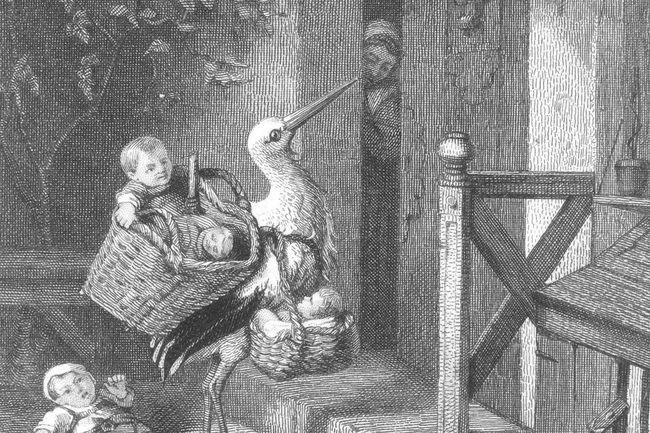
As children, many of us accepted the idea without question: When a baby’s on the way, a stork would deliver it. Perhaps you pictured a gangly white bird soaring through the sky with a newborn wrapped in a blanket dangling from its beak. It seemed perfectly logical until you were old enough to wonder where such an odd idea came from.
The story has endured for generations, appearing everywhere from fairy tales and greeting cards to nursery decorations and cartoons. Like many familiar traditions, it didn’t spring from a single source. So how did it come to be, and why a stork, of all things?
A Symbol of New Life
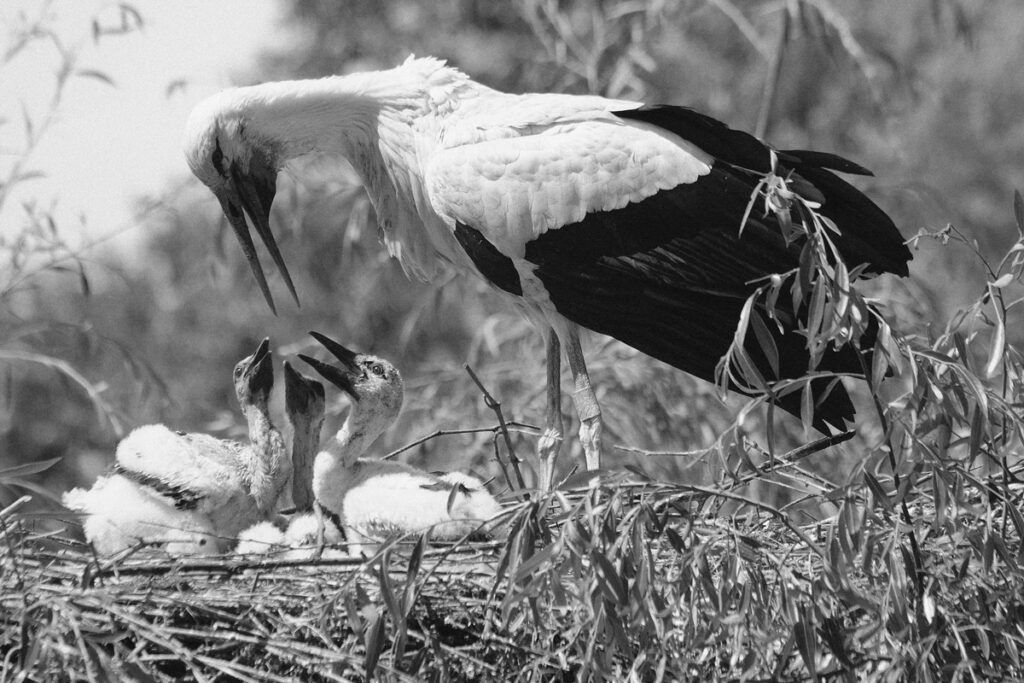
Long before anyone imagined a stork carrying a swaddled infant, people in different parts of the world had already noticed the birds’ unusual habits and connected storks with family, renewal, and new beginnings. White storks (Ciconia ciconia) are large birds with white feathers, black-tipped wings, and long red legs. Unlike many wild birds, they often live close to people, building enormous nests on rooftops, church steeples, chimneys, and towers. White storks migrate thousands of miles each year before returning to their nests in spring, and some pairs of birds raise generations of chicks in the same place.
That consistency made a lasting impression. Storks typically live to be 20 to 35 years old, so families in Europe could watch the same pairs return to the same nests year after year. To people living centuries before modern ornithology, those faithful returns seemed almost magical. Spring already symbolized renewal and fertility, so the arrival of storks appeared to herald the return of life itself.
More from our network





Storks in Folklore
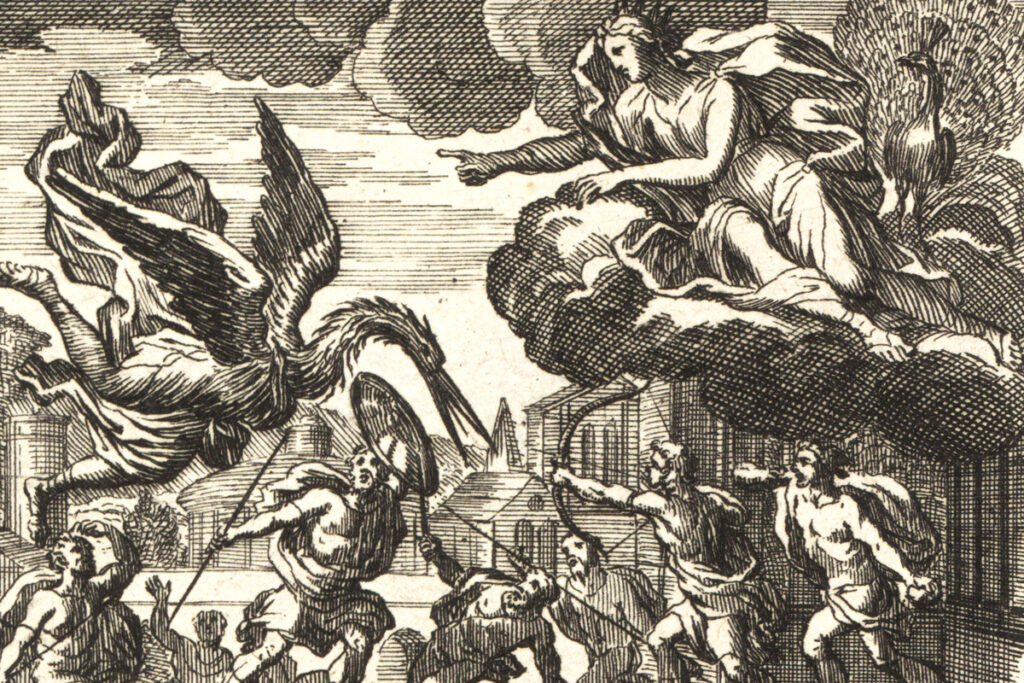
The birds also carried symbolic meaning in the ancient world. The Greeks admired storks for what they believed was their devotion to parents and offspring, making them emblems of family loyalty and care. Their connection with birth and motherhood also appeared in mythology. In the story of Gerena, a queen of the Pygmies, the goddess Hera transforms her into a stork (or crane, depending on the translation) out of jealousy. Gerena refuses to leave her newborn — who may have been fathered by Zeus — and carries him away.
Because cranes and storks share similar characteristics — large size, long migrations, and a tendency to nest near human communities — they were sometimes intertwined in folklore. Stories about these birds portrayed them as mysterious messengers that could rescue, deliver, or even steal babies, reflecting their seasonal disappearances and returns. Across many cultures, birds were seen as creatures that moved between the earth and the heavens, giving them a special connection to life’s mysteries and making them natural symbols of birth, transformation, and renewal.
Similar connections between storks and new life also appeared beyond Europe. In the Americas, a comparable legend developed among the Sioux involving the wood stork (Mycteria americana) rather than the European white stork. The wood stork’s seasonal migrations and nesting habits, which are tied to cycles of abundance and renewal, inspired stories that connected the bird with childbirth and fertility. These traditions developed independently, but they reflect a shared human tendency to find meaning in nature and to link the arrival of certain birds with new life.
The Story Takes Flight
Although stories connecting storks with birth appeared in more than one culture, the familiar image of a stork delivering a baby developed most strongly in northern Europe, where white storks were especially common. Regional folklore held that the birds brought blessings to households, and a stork nesting on a home was considered a sign of good fortune. Over time, these associations with family and prosperity merged with stories about childbirth, transforming the stork into a messenger of new babies.
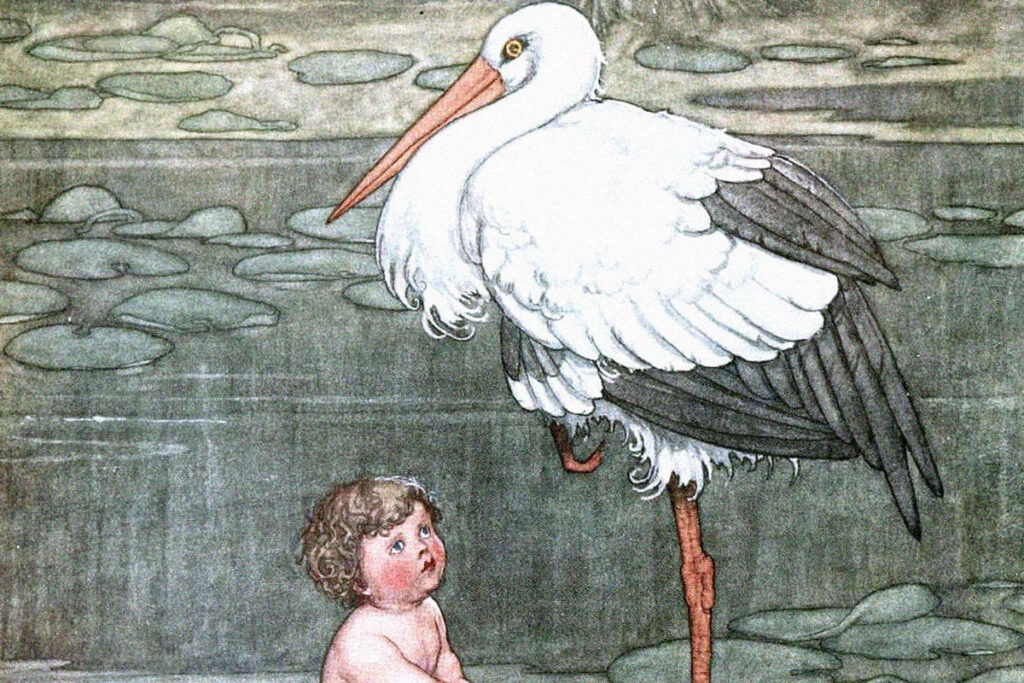
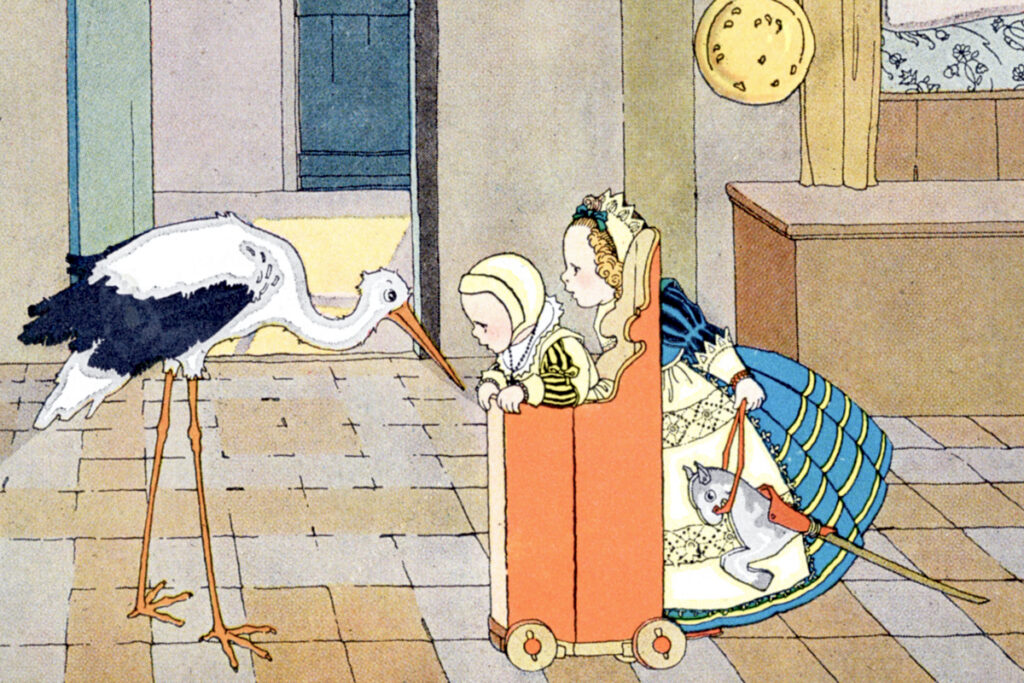
The legend spread widely during the 19th century, as fairy tales and illustrated children’s books introduced regional folklore to a broader audience. One influential example was Hans Christian Andersen’s 1839 fairy tale The Storks, which drew on existing Scandinavian traditions and helped popularize the birds’ connection with children and the delivery of newborns. Andersen didn’t invent the legend, but his story helped carry it far beyond the regions where it originated.
The Birds and the Bees
Victorian social customs gave the myth even greater staying power. During the 19th century, open discussions of sex and human reproduction were often considered inappropriate for children, and many parents preferred gentler explanations of where babies came from. The stork offered a charming alternative, allowing adults to avoid difficult conversations while giving children a simple way to understand a new arrival. Artists, printers, and advertisers soon embraced the idea, depicting graceful white birds carrying infants wrapped in cloth bundles. The illustrations became so popular that the stork evolved into a universal symbol of birth itself.
By the start of the 20th century, that image had moved beyond folklore and into popular culture. It appeared on postcards, advertisements, birth announcements, children’s books, and eventually cartoons, becoming a familiar symbol even in places where white storks don’t naturally live. Today, the baby-delivering stork remains one of the most recognizable symbols of childbirth— not to mention an example of how nature inspires some of our most fantastical stories.


