The Surprising History of Tarot Cards
For centuries, tarot cards have carried an aura of mystery. To many people, they are tools for reflection, storytelling, or spiritual insight, while to others, they are simply beautiful objects, or perhaps sources of fear and disdain. But few people are aware that tarot’s earliest history has nothing to do with divination. Long before the cards were used to peer into inner lives or imagined futures, they were created for a very different purpose: play.
A Renaissance Card Game
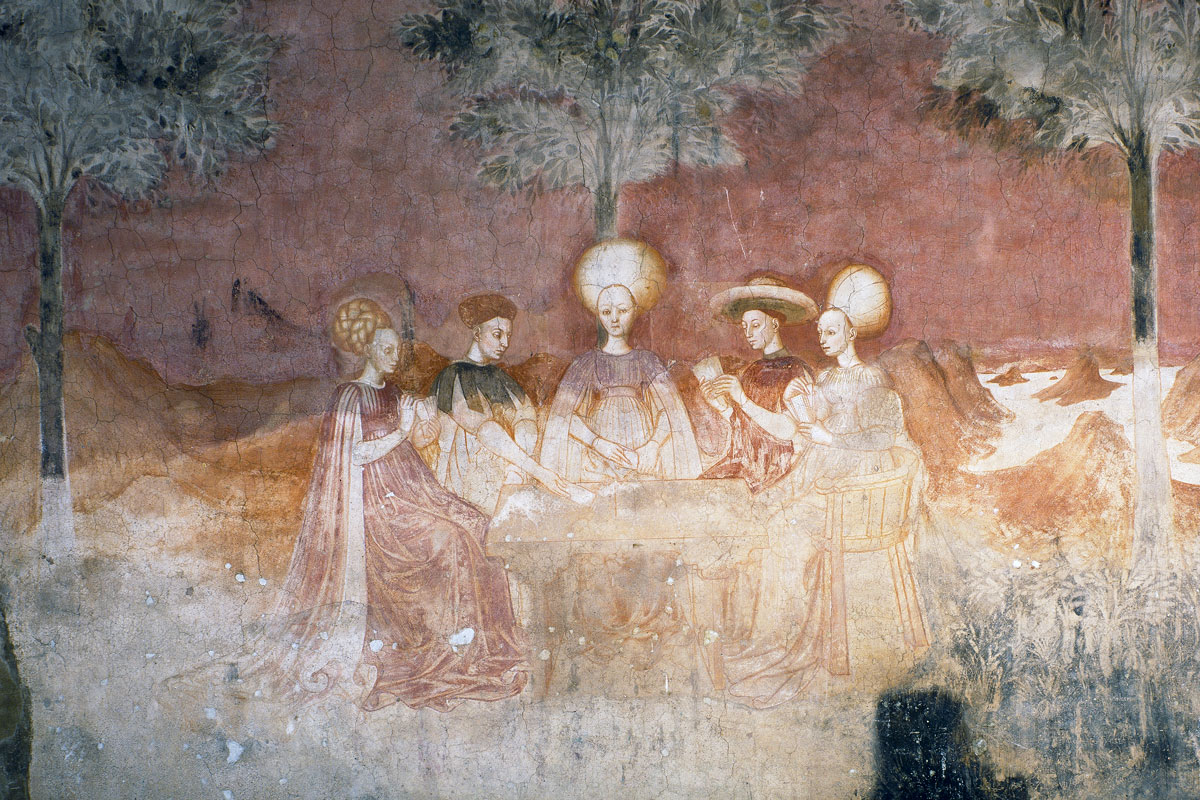
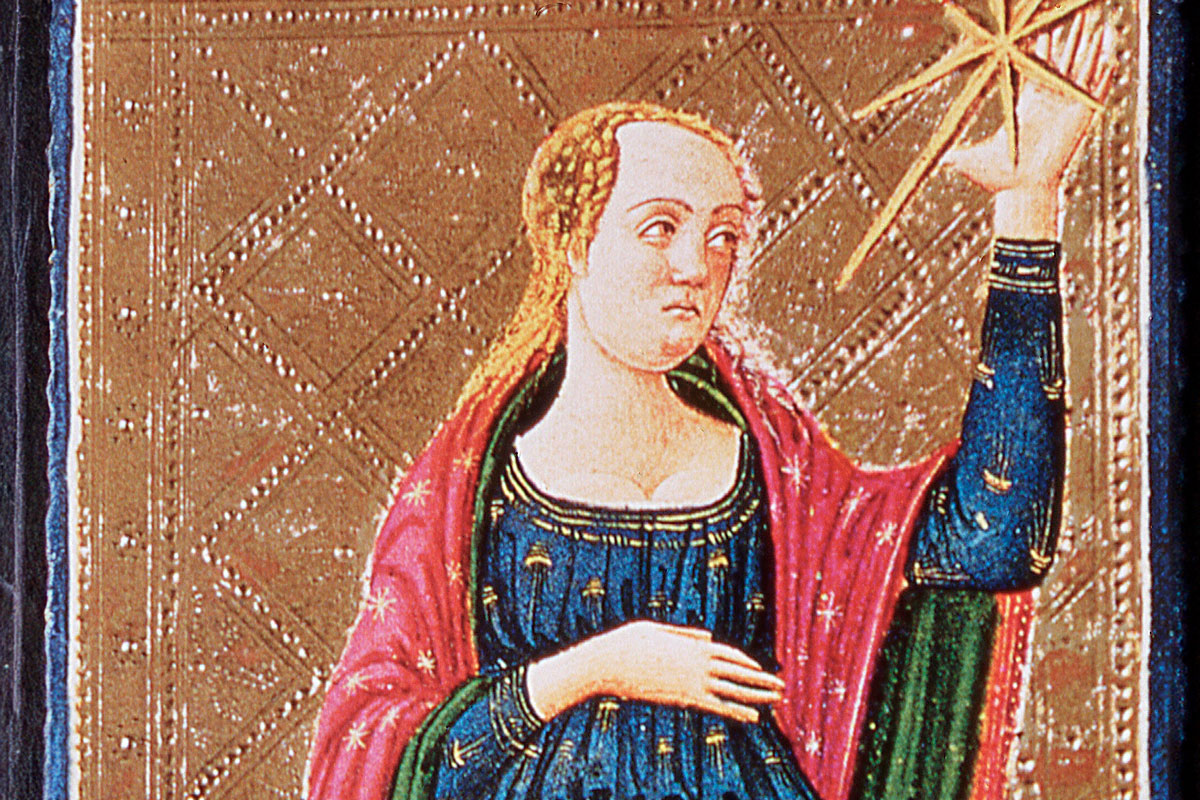
Tarot emerged in northern Italy in the early 15th century, at the height of the Renaissance, when card games were a fashionable diversion among aristocratic courts. Wealthy families commissioned ornate decks known as carte da trionfi, or “cards of triumph,” to play a game called tarocchi. Though the rules have not survived intact, the game appears to have combined skill, memory, and chance, and may have been a bit like bridge.
The most likely patron of the first tarot deck was Filippo Maria Visconti (1392-1447), the reclusive Duke of Milan, whose court delighted in symbolic display and intellectual play. Roughly 15 decks associated with the Visconti family survive today, most famously the Visconti-Sforza deck, dating from the mid-1400s. These cards were luxury objects, lavishly decorated with gold leaf and fine detail, designed to impress as much as to entertain.
You may also like

More from our network




What the Original Images Represented
Despite their later reputation, these early tarot cards were not occult devices. Their imagery drew from a shared visual language familiar to Renaissance viewers: Christian virtues, classical allegory, courtly hierarchy, and reminders of mortality. The characters on the cards — emperors, popes, virtues such as Justice and Fortitude, and figures such as Death or the Fool — echoed themes found in sermons, pageants, poetry, and art.
Some details were intensely personal. Fair-haired figures likely reflected the Viscontis themselves, while lions, fountains, laurel wreaths, and fruit referenced specific military victories, marriages, and dynastic power. (For example, the lion depicted in the Fortitude card likely referenced a military defeat over Venice.) Some scholars have suggested that the trump sequence — the set of allegorical cards later known as the Major Arcana — functioned as a loose meditation on the rise and fall of worldly power. But if the cards hinted at life’s larger forces, they did so without a sense of instruction. They acknowledged fate, virtue, and fortune, but did not claim to explain them.
New Meanings Inspired by “Egyptomania”
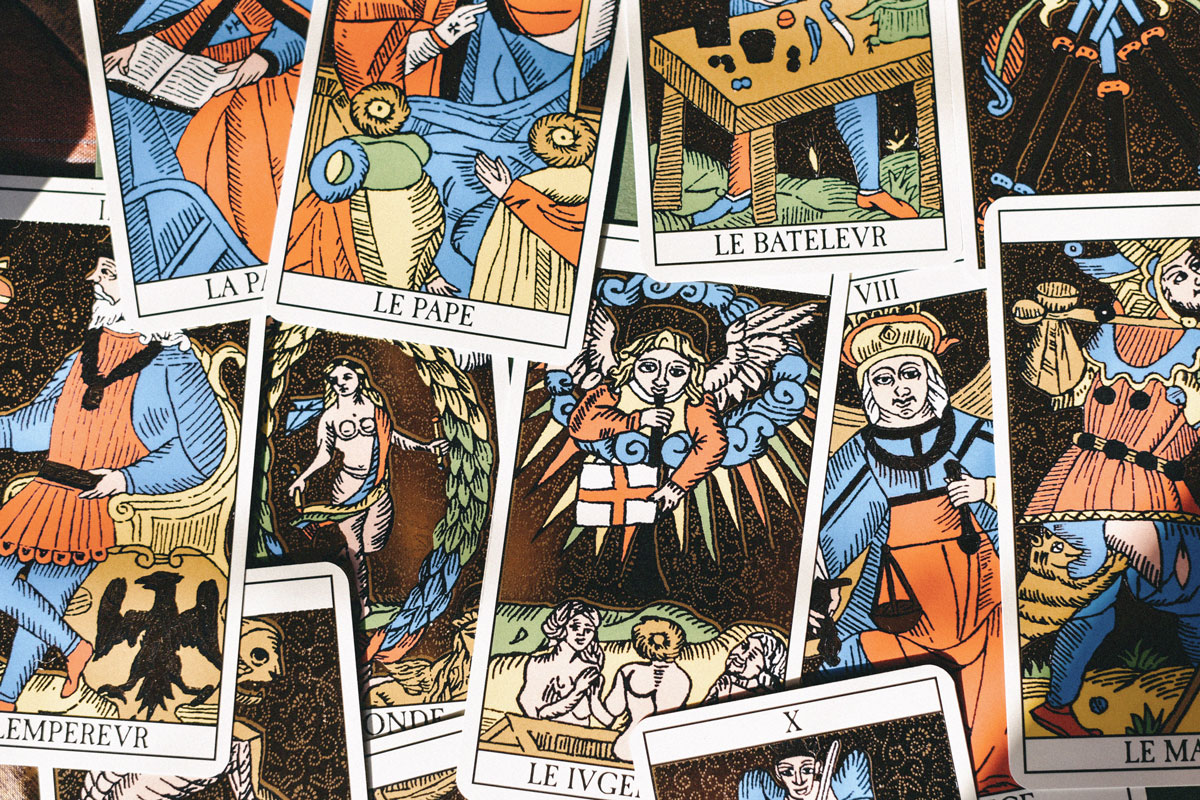
Tarot spread gradually across Europe, reaching France by the 16th century, where the current name took hold (adapted from the Italian tarocchi). Over time, however, the cultural context that once made the symbolic imagery legible began to fade. By the late 18th century, tarot had become visually familiar but symbolically opaque, which also meant that it was ripe for reinterpretation.
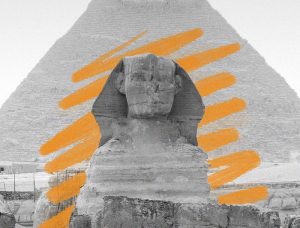
That reinterpretation arrived during a period of intense intellectual ferment. France was in the grip of “Egyptomania,” a fascination with Egypt fueled by Napoleon’s campaigns there and a popular belief that ancient Egypt held some kind of key to universal wisdom. At the same time, traditional religious institutions were struggling to adapt to political and social upheaval, creating space for alternative spiritual systems.
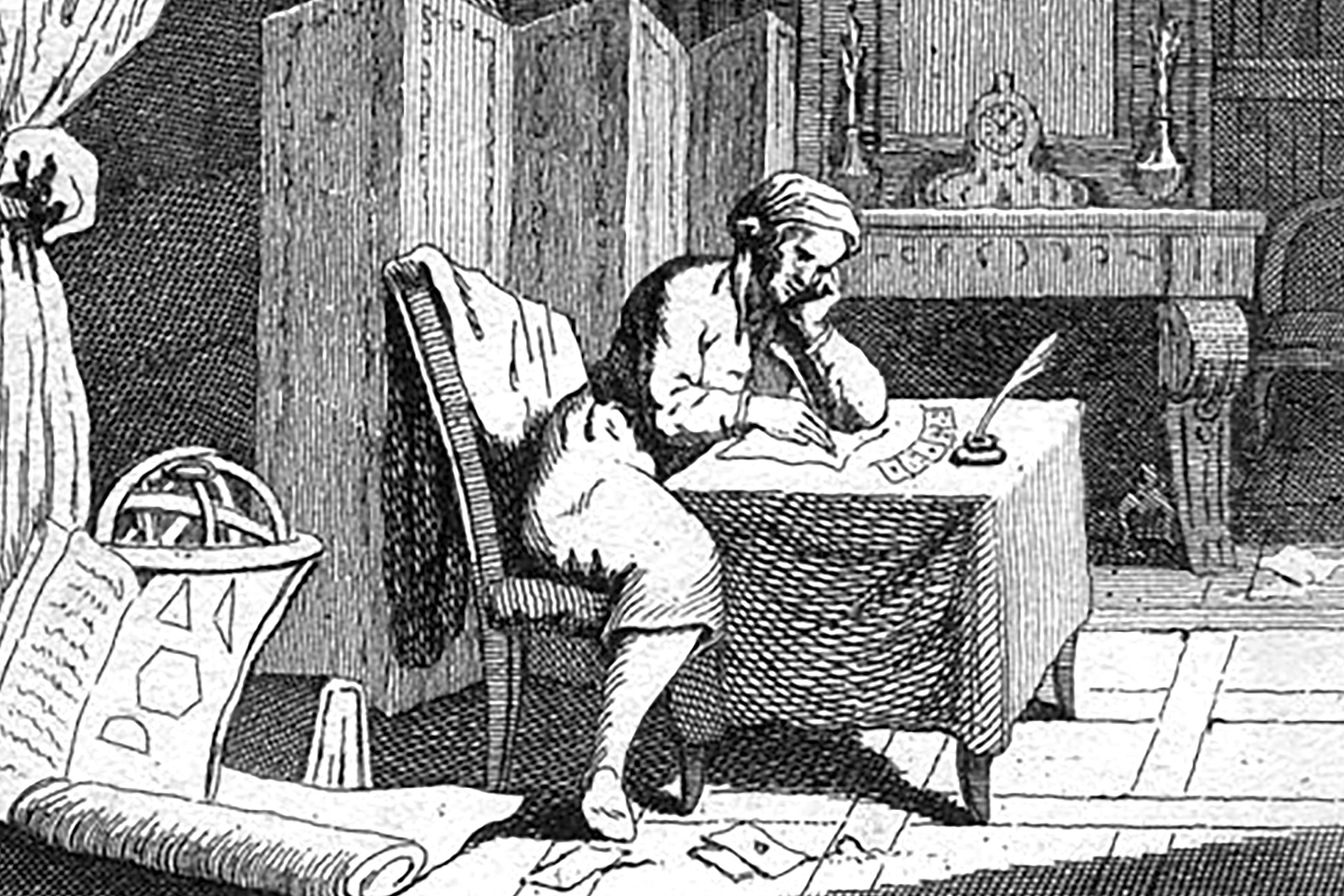
Into this atmosphere stepped Antoine Court de Gébelin (1725-1784), a French scholar who declared that tarot was no mere card game but a fragment of ancient Egyptian wisdom long disguised for the sake of its own survival. The theory was entirely made-up, but it was nevertheless compelling. Tarot, once a Renaissance amusement, was reborn as an esoteric relic.
The Occult Revival
Court de Gébelin’s ideas found eager successors, especially in France. French occultist Jean-Baptiste Alliette published one of the first tarot decks designed explicitly for divination in 1789, layering astrology, numerology, and invented Egyptian lore onto the cards. In the 19th century, occultists such as Éliphas Lévi and Gérard Encausse (known as Papus) linked tarot to hermeticism, astrology, and the kabbalah, embedding the cards within elaborate metaphysical belief systems.
Tarot was no longer a game for anyone to pick up. It was treated as powerful, even dangerous — a tool that required initiation and expertise. To misuse it, some warned, risked madness or ruin.
The Secret Society That Shaped Modern Tarot
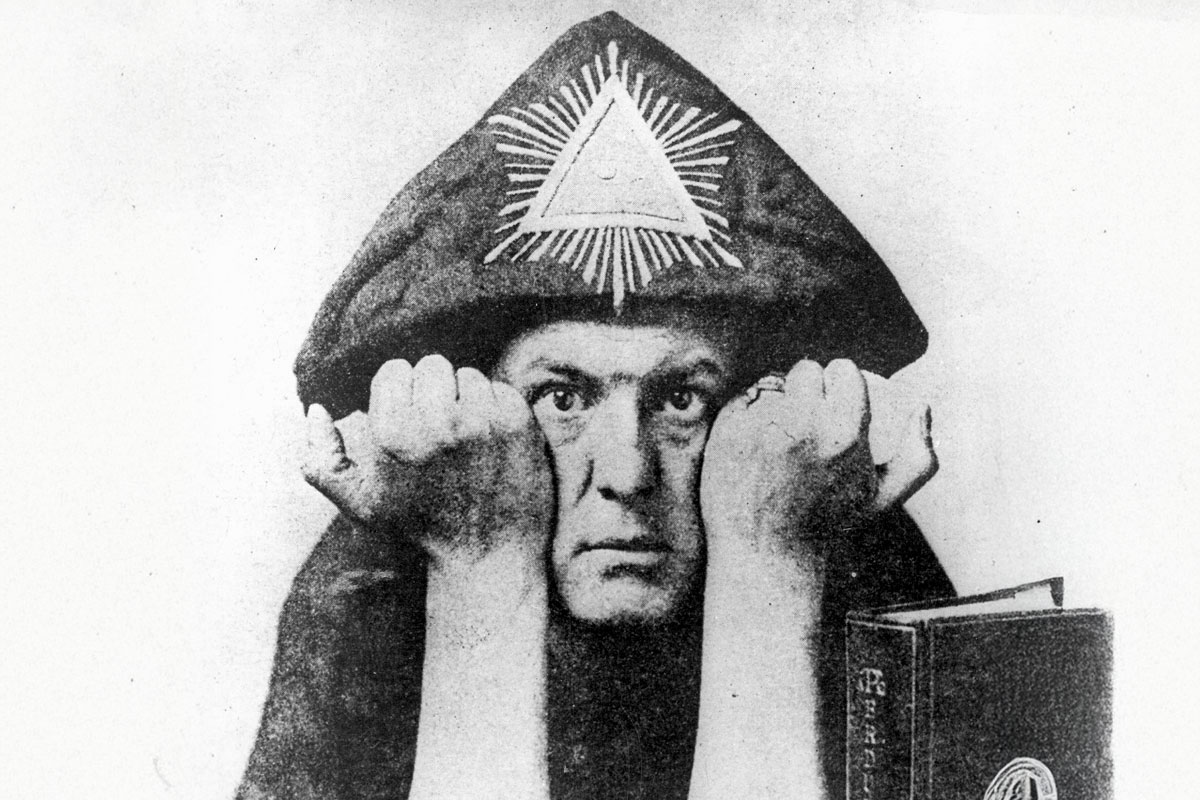
The next major transformation occurred in England, under the influence of the Hermetic Order of the Golden Dawn. Though the secret society never numbered more than a few hundred members, its impact on modern tarot was enormous. Golden Dawn practitioners mapped tarot’s 22 trump cards onto the kabbalistic Tree of Life, assigning each a specific spiritual pathway. These associations still underpin many contemporary interpretations.
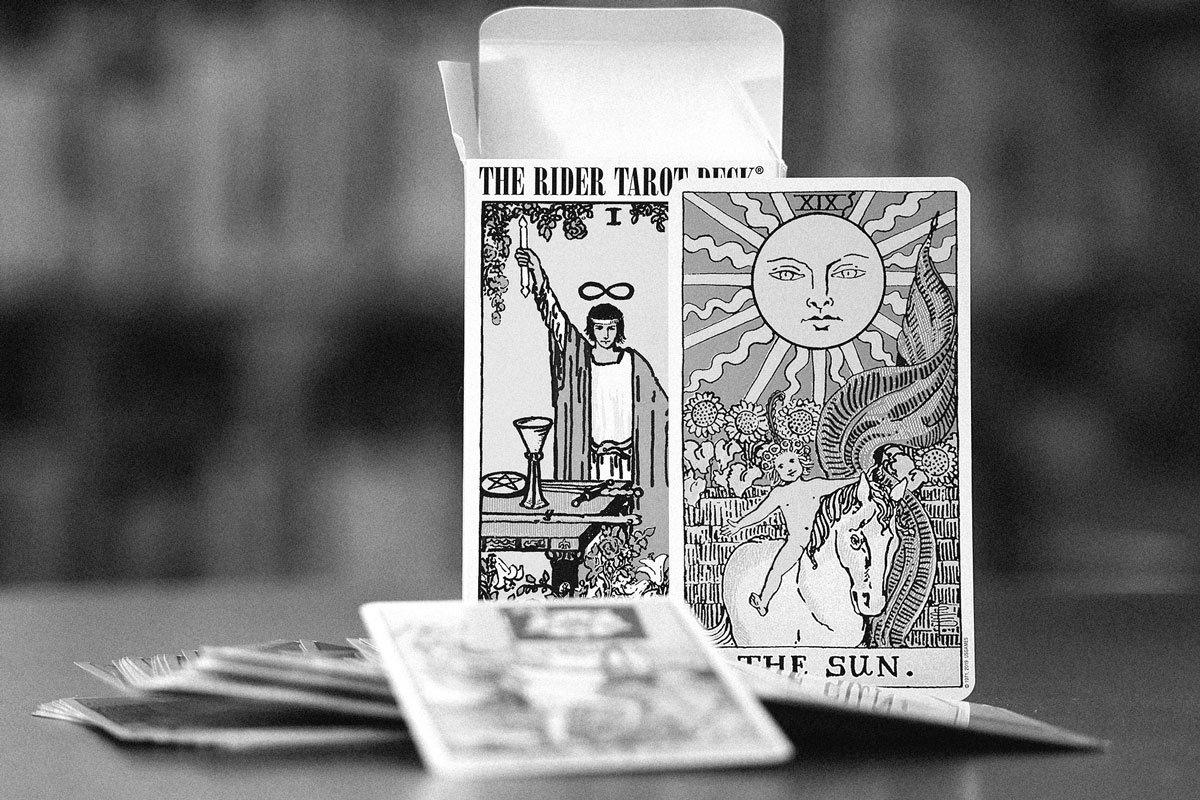
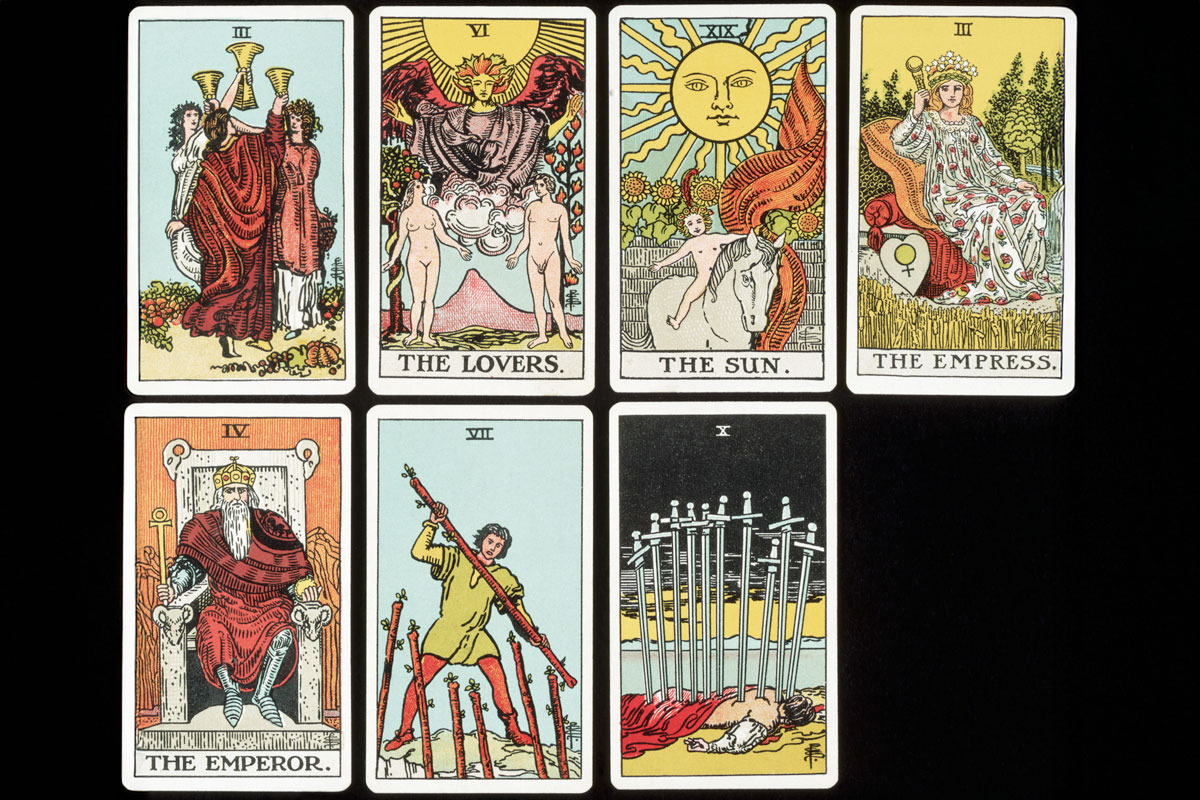
Two Golden Dawn members proved especially influential: English occultists Aleister Crowley and Arthur Edward Waite. Crowley expanded tarot’s network of esoteric correspondences, while Waite made a more practical innovation. In 1909, Waite commissioned artist Pamela Colman Smith to illustrate a new deck in which even the numbered suit cards — previously simple arrangements of symbols — became narrative scenes. The result, now known as the Rider-Waite-Smith deck, transformed tarot reading by making it more story-driven. It remains the most widely used tarot deck in the world.
From Predicting the Future to Self-Reflection
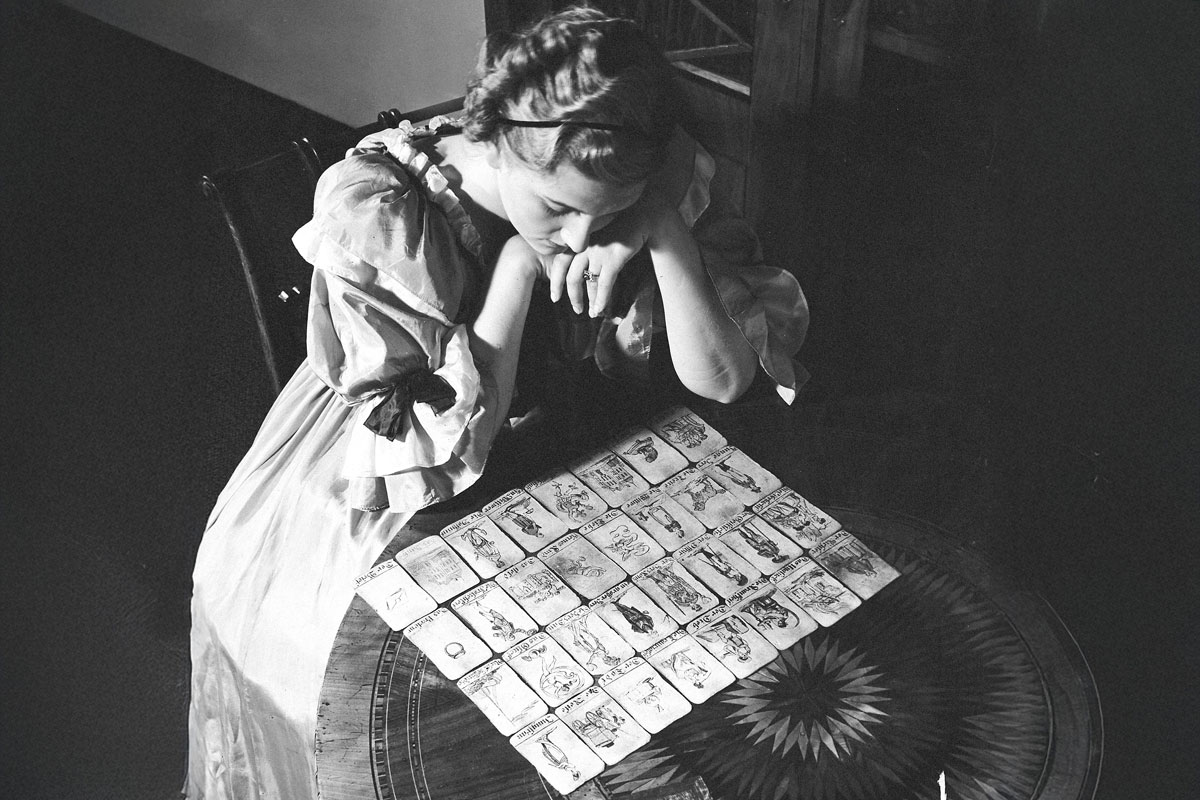
With the rise of New Age culture in the late 20th century, tarot underwent yet another shift. While divination remained central, the emphasis moved from predicting the future to healing, self-development, and psychological insight. Influenced by Jungian ideas about archetypes, modern tarot users embraced the cards as mirrors of inner experience rather than fixed messages from beyond.
At the same time, tarot became radically accessible. Themed decks proliferated — pagan, astrological, pop-cultural, playful, and profound — and anyone with curiosity and a little time could learn to read them. What had once been a guarded esoteric system became a flexible, personal practice.
Tarot Decks Keep Changing
Seen across its long history, tarot has changed meanings many times, reshaping itself to fit the hands that hold it. It began as a game, was transformed into an esoteric symbol system, and now lives in countless forms at once. Each era reworked the cards to reflect its own concerns — be they power, fate, mysticism, or self-knowledge.
Rather than containing timeless secrets, tarot reveals something more human: the enduring impulse to find meaning in images, to tell stories, and to see our own lives reflected in symbolic form. In that sense, tarot has long been doing what it does best — inviting us to look, interpret, and imagine.


