
Why Were People Tied to Train Tracks in Old Movies?
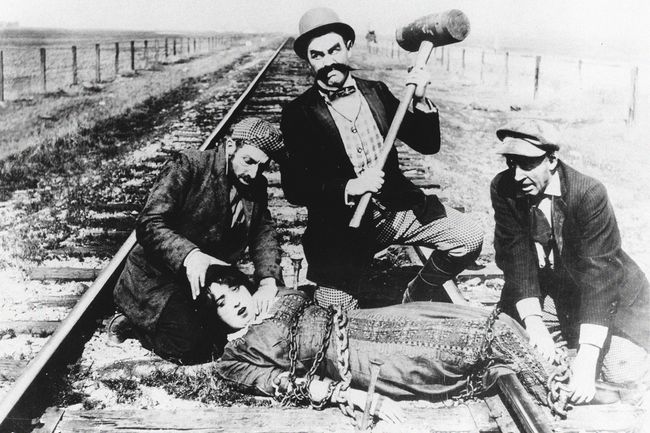
It’s one of the most recognizable images in movie history: a villain in a black coat and a top hat, a helpless victim bound to railroad tracks, and a locomotive bearing down as a hero races in for a last-second rescue.
In the early days of cinema, trains were a popular source of danger onscreen, with characters often being threatened, trapped, or nearly run over by locomotives. But the roots of the trope actually reach further back, to 19th-century stage melodrama, a popular form of theater built around exaggerated characters, high-stakes drama, and clear-cut heroes and villains. Here’s how the railroad rescue became so familiar that it turned into shorthand for old-fashioned villainy.
Born in the Theater
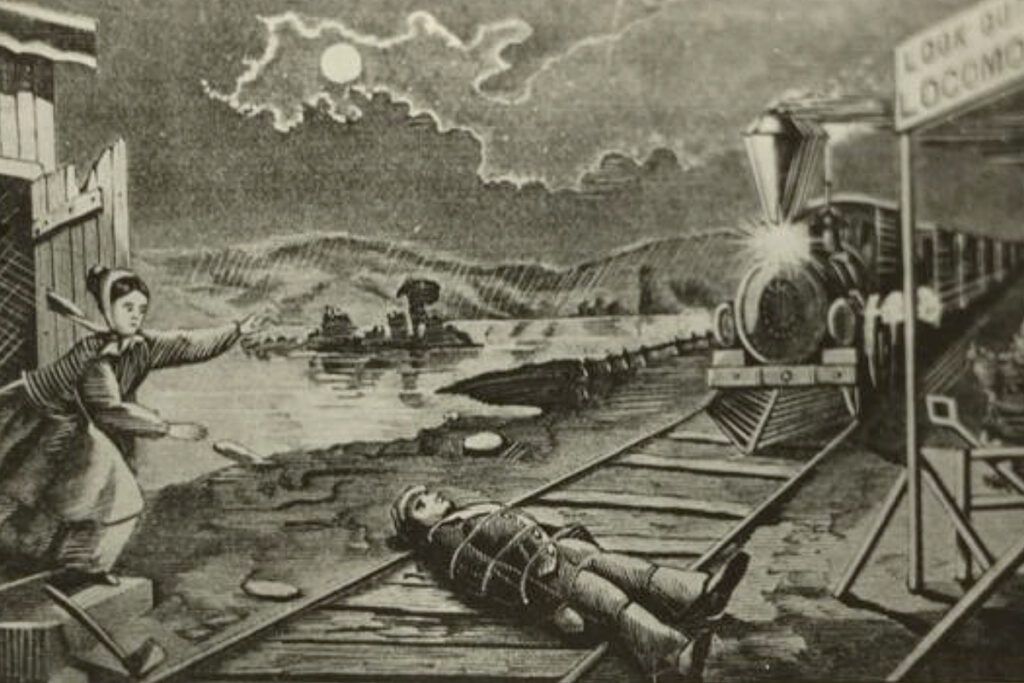
One of the best-documented early examples of this trope appeared in Augustin Daly’s stage melodrama Under the Gaslight, which opened at the Worrell Sisters’ New York Theatre in 1867. In the climactic scene, the villain ties a one-armed Civil War veteran to railroad tracks with a train approaching. The heroine Laura Courtland then races to save him, reaching him just in time.
This depiction is worth noting because the person tied to the tracks wasn’t a helpless woman waiting for a man to save her, as was often the case later. Instead, it was a man in danger and a woman who rescued him. The scene was soon imitated in Dion Boucicault’s After Dark, first performed in 1868, making the railroad rescue an early example of a dramatic device that was recognizable enough to be copied.
More from our network





Silent Film’s Suspense Engine
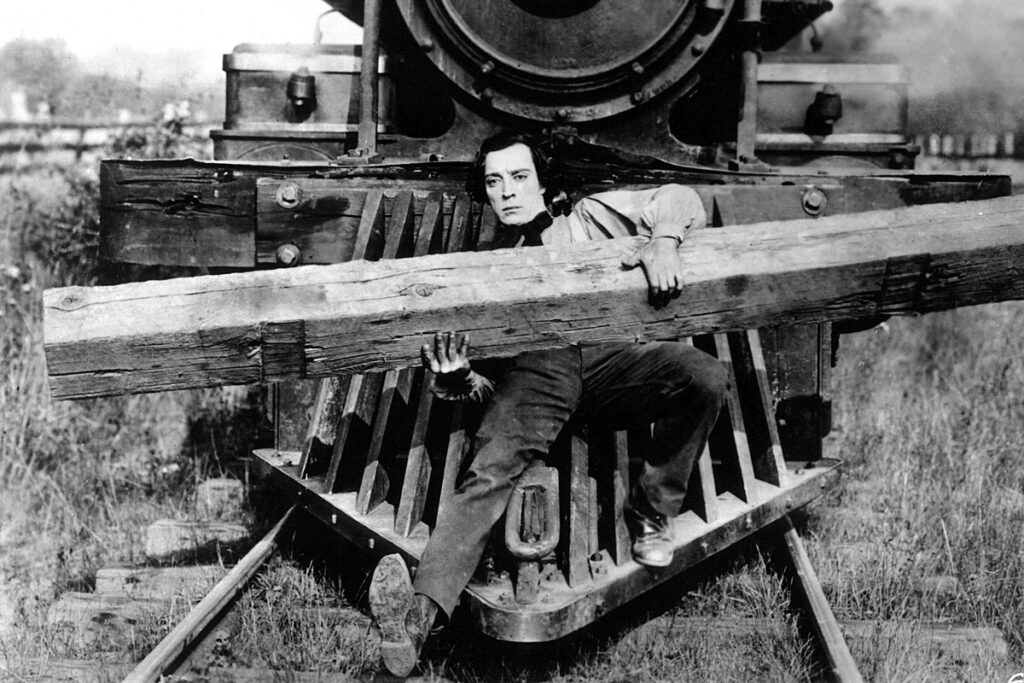
When filmmakers began borrowing theatrical conventions in the early 1900s, railroad drama was an obvious fit. Railroads were a major part of everyday life and trains were already a familiar source of real-world danger. Trains were also visually impressive, and a locomotive bearing down on someone created instant suspense without requiring dialogue.
Edwin S. Porter’s The Train Wreckers, released in 1905, is an early example. Margaret Illington played the daughter of a railway switchman who becomes caught up in a plot to derail a train. The villains knock her unconscious and leave her on the tracks, but her engineer boyfriend rescues her from the approaching locomotive.
Early films featured plenty of people threatened by trains, characters stranded on tracks, and last-second railroad rescues. But the familiar movie trope of a villain deliberately tying a helpless victim to the rails arrived a little later. One of the earliest known film examples is Mack Sennett’s 1913 comedy Barney Oldfield’s Race for a Life. Mabel Normand played Mabel, who is kidnapped by Ford Sterling’s villain and tied to railroad tracks. Real-life automobile racer Barney Oldfield then speeds to the rescue as a train approaches.
The Trope Becomes a Parody
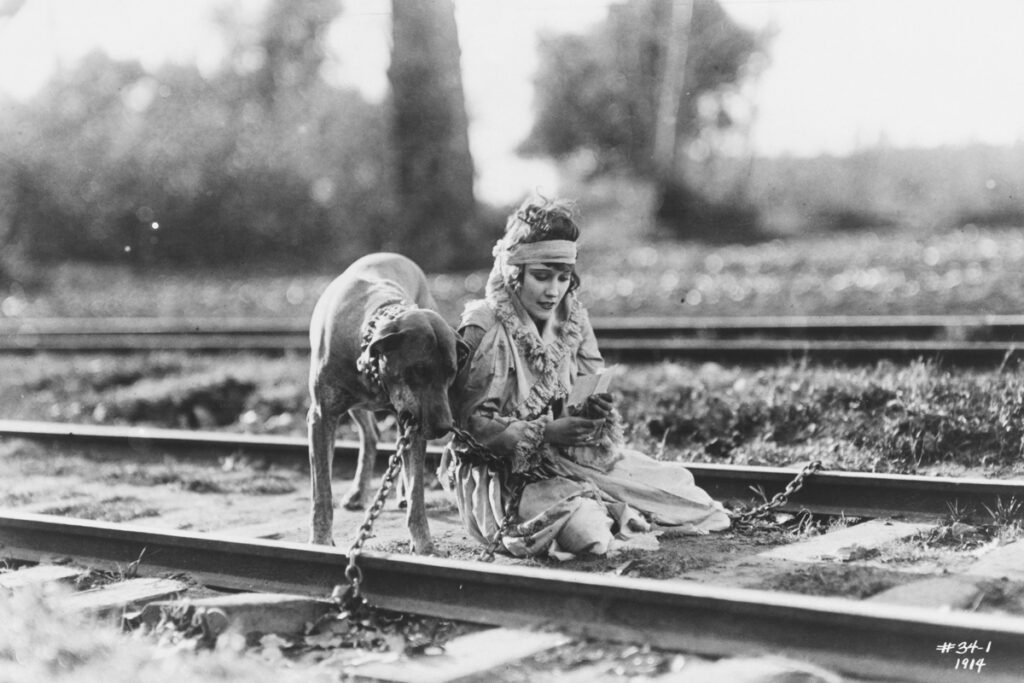
Barney Oldfield’s Race for a Life deliberately piles up the conventions of stage melodrama, including the exaggerated villain, endangered heroine, speeding train, heroic rescuer, and race against time. The gag worked because audiences already recognized the classic formula.
Sennett returned to the trope in 1917’s Teddy at the Throttle, starring Gloria Swanson and Bobby Vernon, with Wallace Beery as the villain. In the film, Swanson’s character is chained to the tracks as a train approaches. She ultimately helps save herself by escaping into a space beneath the tracks as the train passes over her — almost a century before Taylor Swift saved herself from the tracks in her 2011 music video for “Mean.”
The railroad tracks trope wasn’t simply a dramatic convention that filmmakers copied from theatrical performances and endlessly repeated, however. In fact, some of the most memorable movie examples were comedies that exaggerated the familiar melodramatic formula. Pearl White’s 1914 serial The Perils of Pauline became famous for putting its heroine in one dangerous situation after another, but Pauline was never tied to railroad tracks in the serial. The 1947 musical comedy of the same name — a fictionalized account of Pearl White’s rise to fame, starring Betty Hutton as Pearl — included a railroad-track sequence, reinforcing the popular image.
Drawn Into Pop Culture
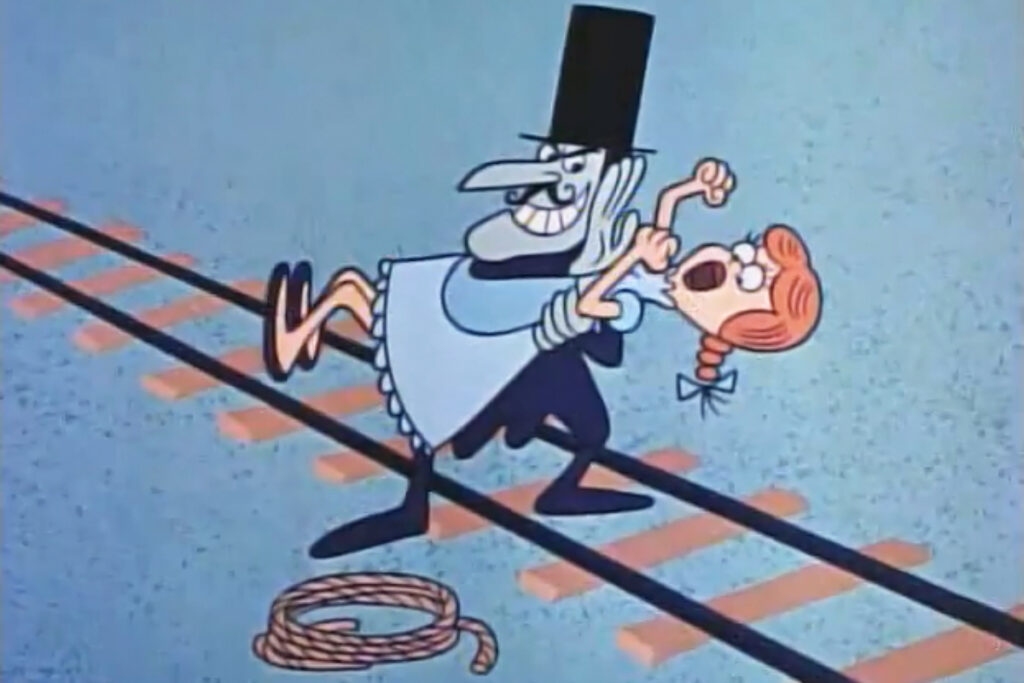
The tied-to-the-tracks image survived in part because later forms of entertainment turned it into an easily recognizable parody. Television animation helped cement the image of the mustache-twirling villain and the damsel in distress facing an approaching train in popular memory. Jay Ward’s Dudley Do-Right of the Mounties, which debuted as a segment of The Bullwinkle Show in 1961, turned the fictional character Snidely Whiplash into a parody of the stock melodrama villain. One of his signature gags was tying the character Nell Fenwick to railroad tracks.
Repeated parodies like this helped preserve an exaggerated version of the railroad rescue long after the original melodrama had faded from popular entertainment. Over time, that exaggerated image became so closely associated with early filmmaking that later generations came to think of it as a staple of silent movies. Today, the image needs almost no explanation. Put someone on the tracks, show an approaching train, and the audience immediately recognizes the danger — and usually understands that the scene is supposed to feel exaggerated, old-fashioned, and certain to end with a heroic rescue.


