The Hidden Histories of Your Favorite Fonts
When we create a document, send an email, or design a logo, we’re able to choose from a wide array of typefaces to find the perfect font. Most of the time, we don’t give much thought to these fonts, apart from the way they look. But these are much more than just collections of letters.
Many fonts are products of history, commissioned for particular purposes and often named in ways that reveal surprising connections to the wider world. Here are the fascinating histories behind seven of the world’s most recognizable fonts.

Times New Roman
In 1929, Stanley Morison, a noted type designer, criticized the London newspaper The Times for being typographically outdated, its narrow shapes and thin lines making it hard to read in print. Rather than push back against the criticisms, the newspaper challenged the designer to come up with something better. In collaboration with draftsman Victor Lardent, Morison spent the next year creating a new font designed specifically for the narrow columns and dense layout of the newspaper, providing improved economy of space without sacrificing readability.
The resultant font, which debuted in The Times on October 3, 1932, was named Times New Roman, because the newspaper’s previous typeface had informally been referred to as Times Old Roman. While they didn’t realize it at the time, Morison and Lardent had created what would become the world’s most famous serif typeface (lettering with small decorative strokes at the ends) — a status cemented in the 1990s when Times New Roman became the default font for Microsoft Office.
You may also like


More from our network





Helvetica
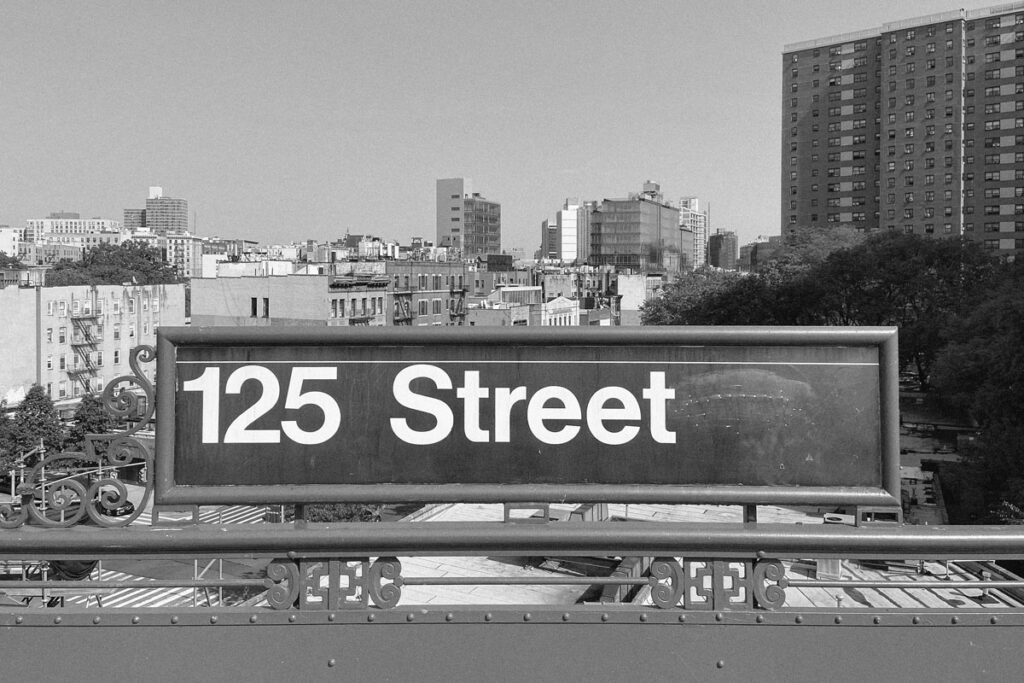
Today, Helvetica is one of the world’s most common fonts, ubiquitous in advertising, publishing, and urban signage. It was created in 1957 by Max Miedinger and Eduard Hoffmann at the Haas Type Foundry in Basel, Switzerland. Inspired by the vintage Akzidenz-Grotesk font (released in 1898), Helvetica was envisioned as a neutral typeface that was clear, easy to read, and could be used almost anywhere, from magazine articles to the New York City subway.
Originally, the font was named Neue Haas Grotesk — but, understandably, the type foundry decided to find a more appealing name before marketing the font internationally. The designers suggested Helvetia— the Latin name for Switzerland — which was then tweaked to Helvetica. The font became available for Linotype printing machines and later, Apple’s first Macintosh computer in 1984. From there, Helvetica’s popularity exploded, and it became arguably the most influential font of the 20th century.
Courier
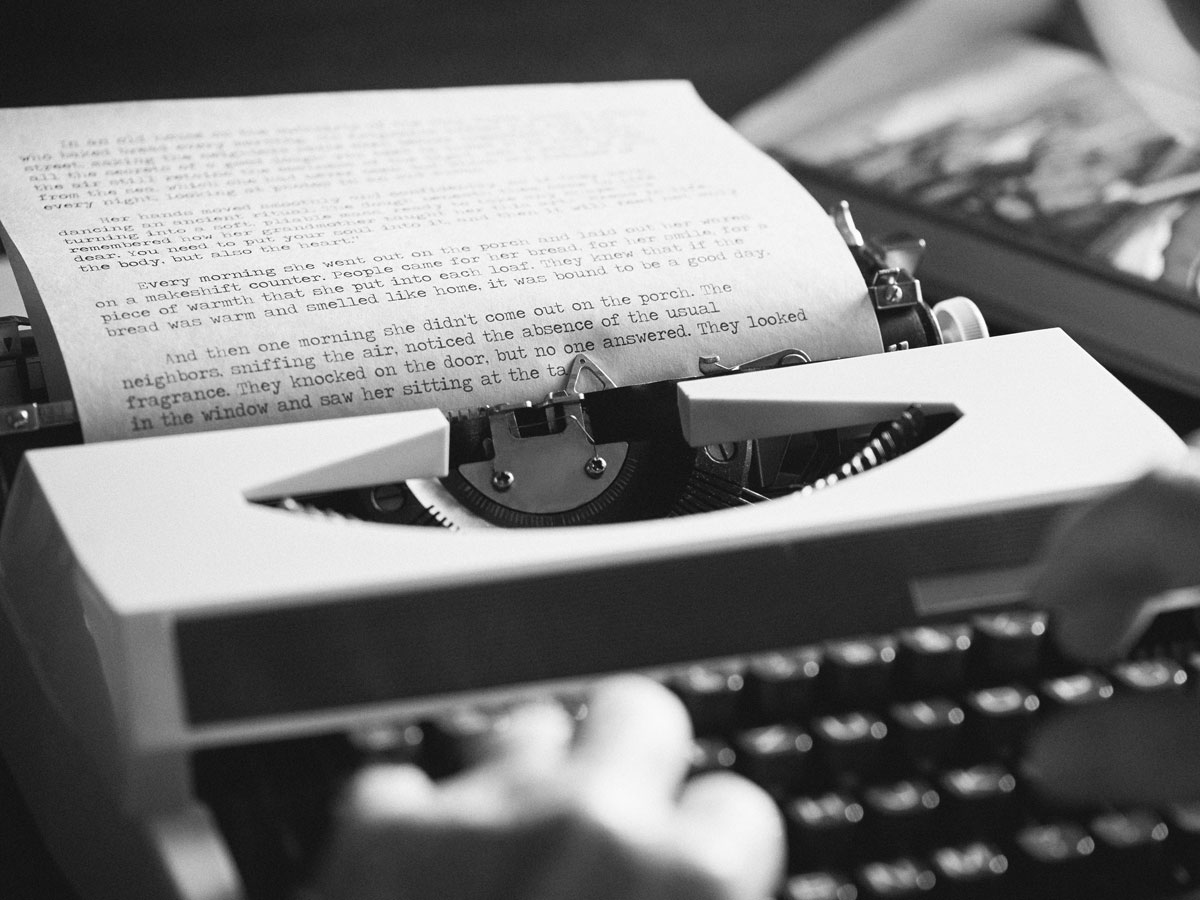
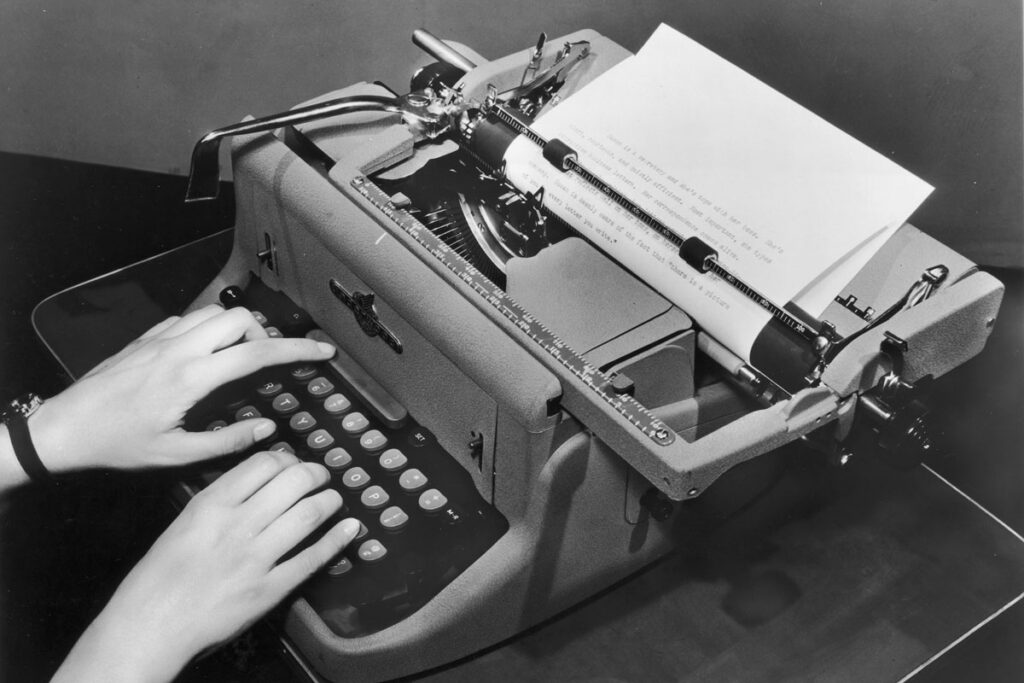
Courier was designed by Howard “Bud” Kettler in 1955 for IBM, specifically for the company’s typewriters. It was made to be monospaced, meaning that every character occupies exactly the same width — a mechanical necessity in typewriters where each key strikes the paper at the same distance from the last.
IBM made a strategic business decision not to protect Courier with copyright or design patents, and as a result it soon became a standard font used throughout the entire typewriter industry. Even when digital typography arrived and many fonts abandoned monospacing, Courier persisted. As for the font’s name, Kettler nearly called it Messenger. He then changed his mind, explaining, “A letter can be just an ordinary messenger, or it can be the courier, which radiates dignity, prestige, and stability.”
Arial
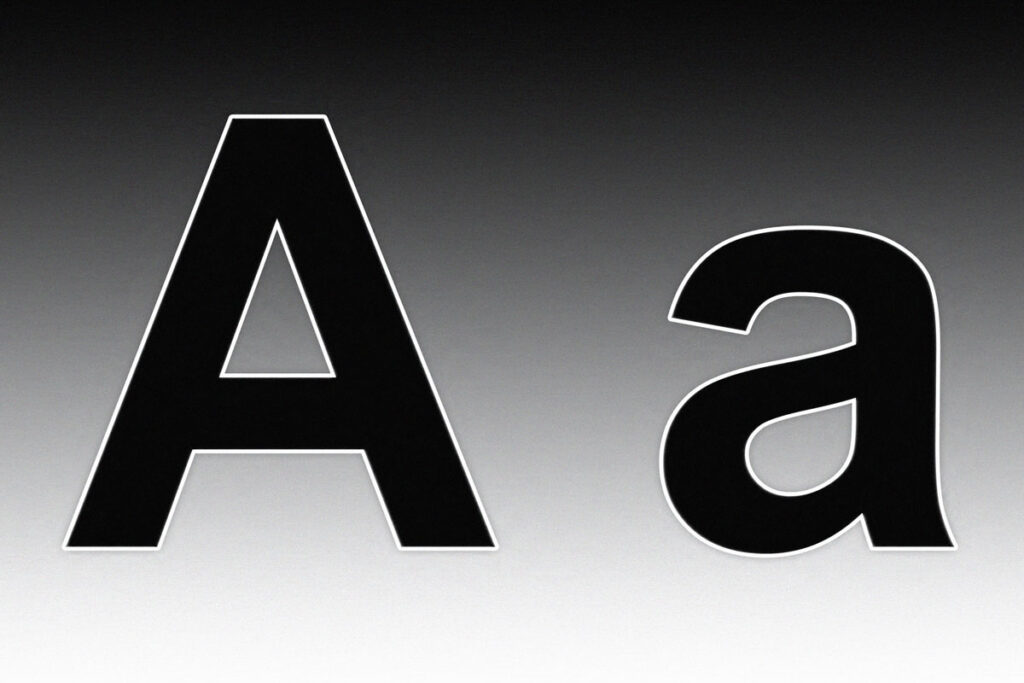
You might not expect to find much controversy in the world of fonts, but the rise of Arial brought about a typeface hullabaloo. The seemingly innocuous font was designed in 1982 by type designers Robin Nicholas and Patricia Saunders. It was created to be metrically compatible with Helvetica, with Arial’s characters having exactly the same widths as the older, established font. This meant that documents could easily swap between Arial and Helvetica without layout changes.
The creation of this new, suspiciously similar font was also a way to avoid licensing fees for using Helvetica. The design community was swift in its criticism of Arial, calling it a poor imitation and clone of Helvetica. Nonetheless, the font quickly grew in popularity after its inclusion in Microsoft Windows in 1992, and it is now preinstalled on virtually every computer. Still, it remains a black sheep in the typographer community: In 2001, type designer Mark Simonson called Arial “little more than a shameless impostor” that only “pretends to be different.”

Comic Sans
Comic Sans is another font with a notorious reputation. But when type designer Vincent Connare created the font for Microsoft in 1994, he didn’t intend any harm. In fact, the typeface was originally intended for the speech bubbles of an animated cartoon dog called Rover who appeared in the short-lived Microsoft Bob software that guided users through the Windows interface.
Connare, who quite reasonably argued that dogs don't talk in Times New Roman, created Comic Sans as a friendlier, more playful alternative, with comic book-inspired letterforms in a handwritten style. Microsoft included Comic Sans in Windows 95, and soon it was everywhere: on birthday invitations, in classrooms, in business presentations, etc. It even began appearing in what the design community considered highly inappropriate contexts, including on gravestones, commemorative benches, and funeral invitations. A backlash ensued, championed by the “Ban Comic Sans” movement of 1999. Somehow, a font designed for a cartoon dog became one of the most significant — and divisive — typefaces of the digital age.

Georgia
Traditional serif fonts such as Times New Roman were designed for high-resolution printing. But while their fine details looked elegant in books, magazines, and newspapers, they turned blurry or jagged on low-resolution screens. So, in 1993, Matthew Carter, one of the most renowned typographers of the 20th century, designed a serif font specifically for the digital world.
The result was Georgia. Among its chief characteristics were a larger-than-average x-height (the height of lowercase letters, excluding ascenders and descenders) and increased tracking (the space between each letter), improving clarity and readability, especially on small displays, regardless of resolution.
The font’s elegant-sounding name has a less than elegant origin story. Apparently, Carter was deciding what to call his new font when he saw a tabloid headline that read: “Alien Heads Found in Georgia.” He thought that “Georgia” sounded like a good name for an elegant typeface, and chose it for his font.

Calibri
In 2002, Dutch type designer Lucas de Groot was contacted by an intermediary who asked him to create a proposal for a monospace typeface and a sans serif font for an unnamed client. He sent his two proposals to the client, including sketches for his new Calibri design; the client, which turned out to be Microsoft, accepted both. The font was exactly what Microsoft was looking for: Its subtly rounded design was friendly; its clean, straightforward lines were easy to read; and it was perfectly suited to screens of all sizes.
Calibri was released to the public in 2007 with Windows Vista, becoming the default font on Microsoft Office and immediately going global. Etymologically, Calibri could have had a very different backstory. Microsoft requested a name that started with the letter C, to which De Groot proposed “Clas” (a Scandinavian name associated with “class”) and “Curva” or “Curvae.” But the people at Microsoft pointed out that “Clas” meant “to fart” in Greek, and “Curva” meant “prostitute” in Russian. So, in the end, they settled on the inoffensive “Calibri,” which Microsoft employees said relates to “calibrating the rasterizer in the ClearType font rendering system” — whatever that might mean.


