




A town moved itself, building by building.
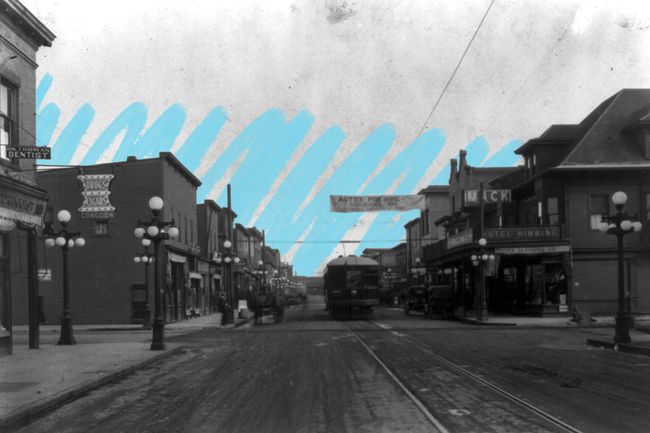
If you think moving one house is exhausting, imagine trying to move a whole town. That’s essentially what happened in Hibbing, Minnesota, where residents relocated homes, hotels, and other buildings to reach a treasure beneath their feet: iron ore.
Founded in 1893, Hibbing grew up around the rich iron deposits of Minnesota’s Mesabi Range. Unfortunately, some of that wealth lay directly underneath the town. As the Oliver Iron Mining Company’s open-pit mine expanded, it surrounded Hibbing on three sides. World War I increased the demand for steel, and in 1918, the company announced that it needed access to the ore beneath the town’s northern section. Local leaders agreed to relocate the business district and many homes to a community called Alice, about 2 miles south, which had incorporated with Hibbing a few years earlier.
The move required considerably more than wrapping kitchen plates in bubble wrap and boxing up books and knickknacks. Workers placed logs beneath buildings, secured the structures with steel cables, and rolled them along specially constructed wooden rails. Horses, farm tractors, and a steam-powered crawler supplied the pulling power. Oversized buildings were cut into two or three sections for the journey, and chimneys were removed if necessary to clear overhead wires. More than 180 houses and 20 businesses made the trip from the old Hibbing to the new over the next several years.
Not every building survived the move. In 1920, the Sellers Hotel collapsed in transit; residents used its wreckage as firewood that winter. But most of the relocation succeeded, and the business district of the new Hibbing celebrated its grand opening in 1921. The mining company also helped fund new utilities and built a hotel, city hall, and high school. Some buildings remained in the old Hibbing, only to be demolished as mining expanded further. Today, surviving foundations and historical markers offer reminders of the town that once stood there. But most of it has been absorbed into the Hull-Rust-Mahoning Mine — one of the world’s largest open-pit iron ore mines.


