




Warplanes timed their machine guns to fire directly through propeller blades.
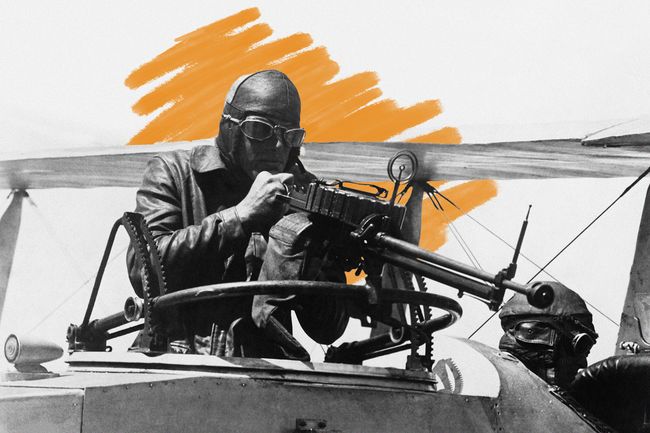
There’s no slow motion in real life, but World War I engineers managed the next best thing. Known as synchronization gear, the technology allowed warplanes to fire machine guns through their own propeller blades without hitting them. This innovation, also known as interrupter gear, was made during the so-called “war to end all wars,” which was marked by numerous technological advancements that made combat more sophisticated — and brutal — than ever before.
The first synchronization gear was built in 1915 by Anthony Fokker, a Dutch engineer working for the German Air Service, whose invention led to the summer of 1915 being known as the “Fokker Scourge.” The gear worked by triggering the machine gun to fire once per revolution, always at a fixed point that allowed the round to avoid the propeller blade entirely. This maintained a high, constant rate of fire and let pilots focus on flying without worrying that the rather large weapon mounted on top of their fuselage would take down their plane instead of the enemy’s.


