




Greenland got its flattering name as a recruiting pitch.
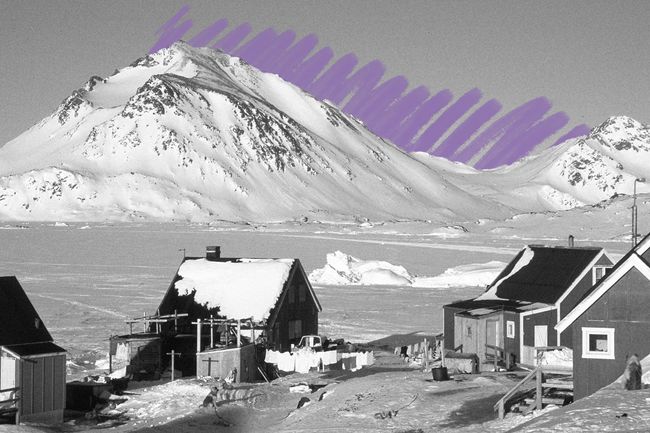
Greenland is icy and Iceland is green, as the saying goes, and for the most part it’s true. Nearly 80% of Greenland’s surface area is covered in glaciers, compared to just 10% to 14% of Iceland’s, which has led many to observe that the two remote islands should probably switch names. The reason they never will has to do with one man: Erik the Red, who came to Greenland in 982 CE after being exiled from Iceland, and who figured, probably correctly, that not many others would do likewise if they realized how inhospitable his new home was.
Erik the Red wasn’t the first to call the island Greenland; that would be the German chronicler Adam of Bremen, who noted in the 11th century that “the people there are greenish from the salt water.” But the explorer born Erik Thorvaldsson popularized the name, knowing he couldn’t establish a village alone. After exploring the area for a few years, he returned to Iceland to recruit more settlers (who were indeed persuaded by his descriptions of Greenland as, well, green) and set sail again with 25 ships — 14 of which successfully made landfall.
Greenland was fairly green during Erik the Red’s time, and parts of it still are during the warmer months — but a little marketing never hurt anybody. The territory’s name in Greenlandic is Kalaallit Nunaat, meaning “Land of the Kalaallit,” referring to the native Greenlandic Inuit.


