




Pink was historically worn by men.
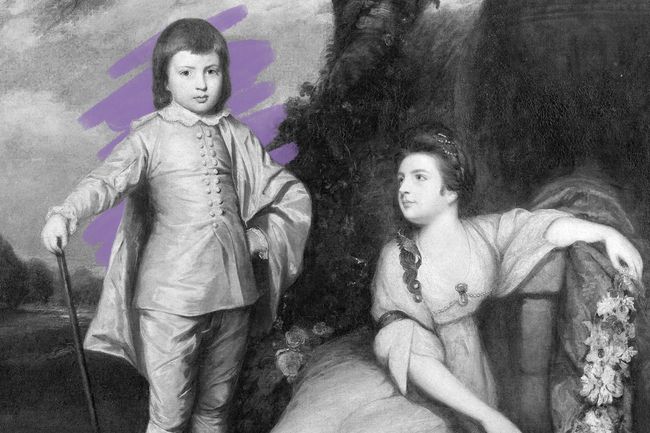
For the most part, pink is seen as a feminine color in the United States today. But while a pink suit on a man might turn heads now, in 18th-century Europe it could mark its wearer as a fashionable gentleman.
Wealthy men of the time dressed in shades of pink ranging from salmon to berry, pale rose to deep magenta. Pink shared some of the associations of red, which was seen as a color of vigor and power. Meanwhile, expensive dyes imported from South America and South Asia helped make it a display of wealth. London’s Victoria and Albert Museum preserves a portrait miniature from the 1740s showing British statesman William Pitt, 1st Earl of Chatham, in a deep-pink coat.
Pink wasn’t exclusively for men, however; rather, it was seen as a unisex color of elegance. The familiar pink-for-girls, blue-for-boys convention developed gradually in the 20th century, with considerable variation and disagreement along the way. In 1918, the trade publication The Infants’ Department recommended pink for boys, describing it as the stronger color. Yet a department store survey published in Time in 1927 found that some stores recommended pink for boys while others advised blue, no doubt leaving many parents confused.
Two paintings may have helped settle the matter. Fashion historian Valerie Steele has suggested that publicity surrounding American millionaire Henry Huntington’s 1920s acquisition of “The Blue Boy,” by Thomas Gainsborough, and “Pinkie,” by Thomas Lawrence, helped reinforce the association of blue with boys and pink with girls. Their apparent symmetry, however, was misleading; the paintings weren’t conceived as companions, and their subjects’ clothes hardly represented a universal rule. Nevertheless, by the mid-20th century, the pink-for-girls convention had become more firmly established in the United States — a relatively recent development in the long history of getting dressed.


