



Early movie theaters hired people to explain what was happening onscreen.
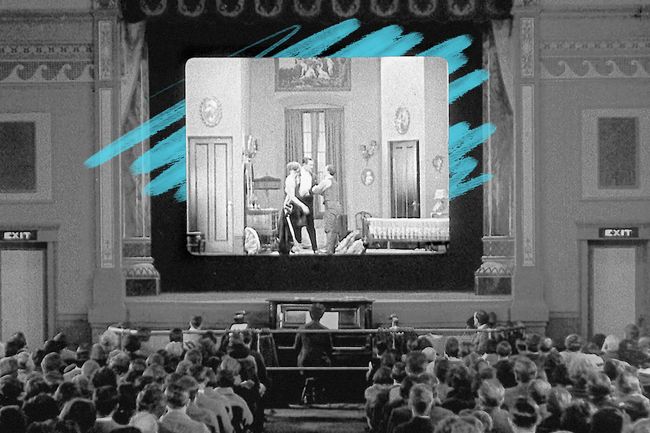
Before they were a ubiquitous facet of everyday life, movies — and movie theaters — were a novelty that few people fully understood as a storytelling medium. And when something is difficult to understand, the best option is usually to bring in someone who can explain it. That’s what movie theaters did in the early 20th century: They hired lecturers to guide viewers through the action onscreen, which, in addition to being silent, often lacked intertitles to provide context.
The lecturer would stand off to the side of the screen, explain what was happening, and even provide dialogue and/or sound effects — a kind of bridge between this new form of entertainment and magic lantern shows, which projected still images while a narrator told the accompanying story.
Despite being popular in the United States as well as France and Germany, these lecturers were phased out in the early 1920s. As audiences grew used to intertitles as a storytelling device and live music became more prominent, there was little need for them — and even less when 1927’s The Jazz Singer ushered in the “talkie” era by being the first feature-length film with fully synchronized dialogue.


