


Columbus said he saw mermaids.
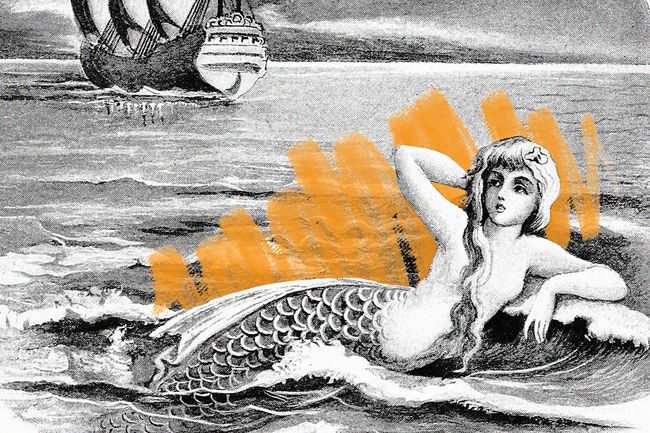
On January 9, 1493, as Christopher Columbus was sailing along the northern coast of Hispaniola (near what is now the Dominican Republic), his journal recorded an unusual sighting from the previous day. Near the mouth of what’s now the Yaque del Norte River, which Columbus named the Río del Oro, or “River of Gold,” he had seen three “mermaids” rise high out of the water. He was not entirely enchanted: The creatures, he observed, were “not so beautiful as they are painted,” though their faces appeared somewhat human. Columbus added that he had previously seen similar beings off the coast of West Africa.
Columbus’ original journal has been lost, but the account survives in a later copy made by Spanish friar Bartolomé de las Casas. Because the brief description doesn’t include any distinguishing anatomical details, it’s impossible to prove exactly what Columbus encountered. However, the “mermaids” are generally believed to have been manatees. If that’s true, the famous explorer’s account is the first written record of the animals in North America.
From a ship’s deck, a surfacing manatee might have seemed surprisingly humanlike. The slow-moving mammals have rounded heads, small eyes, and necks that allow them to turn their heads side to side. Their habit of rising upright in the water and looking around may have helped sailors fill in the rest of the picture. The resemblance even became embedded in scientific terminology: Manatees belong to the order Sirenia, named after the sirens of mythology.


