




Why Did People Start Shaking Hands?
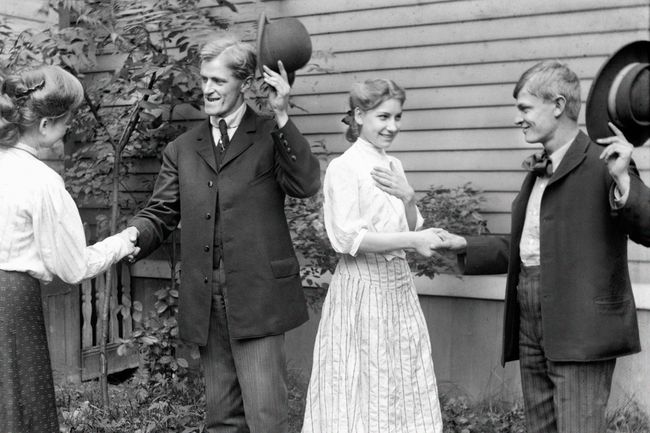
For many people, a handshake feels so natural that it’s easy to assume humans have been greeting each other this way for as long as humans have been around. In the Western world, whether you’re meeting someone for the first time or sealing a business deal, extending your hand is almost second nature.
Indeed, people have clasped hands for at least 3,000 years, though the familiar handshake we use as an everyday greeting is much more recent. Over the centuries, the gesture has symbolized everything from military alliances and sacred promises to equality, friendship, and professional courtesy. It has even repeatedly fallen out of favor during epidemics, only to return again. In other words, the handshake has never meant just one thing. Here’s a brief (handy, even) history of why we shake hands.
Ancient Handshakes
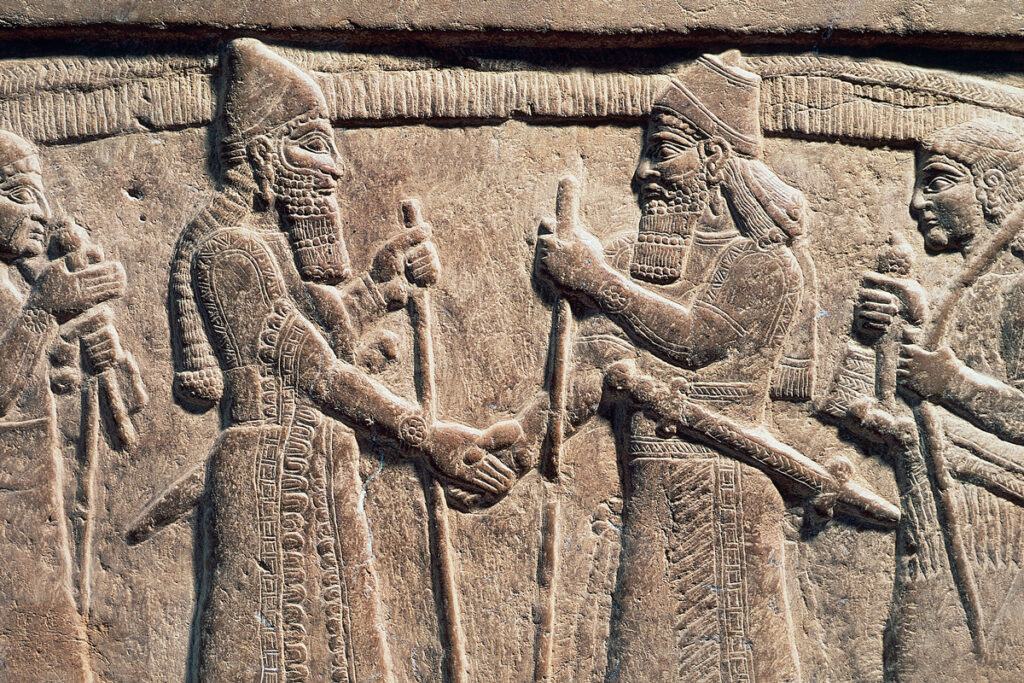
The earliest known image of a handshake dates to the ninth century BCE. A carved stone relief from the ancient Assyrian city of Nimrud (in modern-day Iraq) depicts King Shalmaneser III of Assyria clasping hands with King Marduk-Zakir-Shumi I of Babylonia as the two rulers cement an alliance. The gesture appears to represent mutual trust and political agreement.
Ancient Greek literature offers similar examples. In both the Iliad and the Odyssey, Homer describes characters grasping each other’s right hands while making pledges or demonstrating loyalty. Greek artists, meanwhile, carved handshakes into funerary monuments, where the gesture symbolized a final farewell, an eternal bond between the living and the dead, or even the hope of reunion in the afterlife. (Clasped hands again became a sign of the link between the living and the dead during the Spiritualist era in 19th-century America.)
The Romans embraced the symbolism as well. Pairs of clasped hands appeared on coins as emblems of friendship, loyalty, and political unity, while the poet Ovid described enemies shaking hands after laying down their weapons to end a conflict. These ancient examples show that clasping hands carried powerful symbolic meaning — but they weren’t the handshake as a form of greeting that we’re used to today.
More from our network




A Sign of Peace?
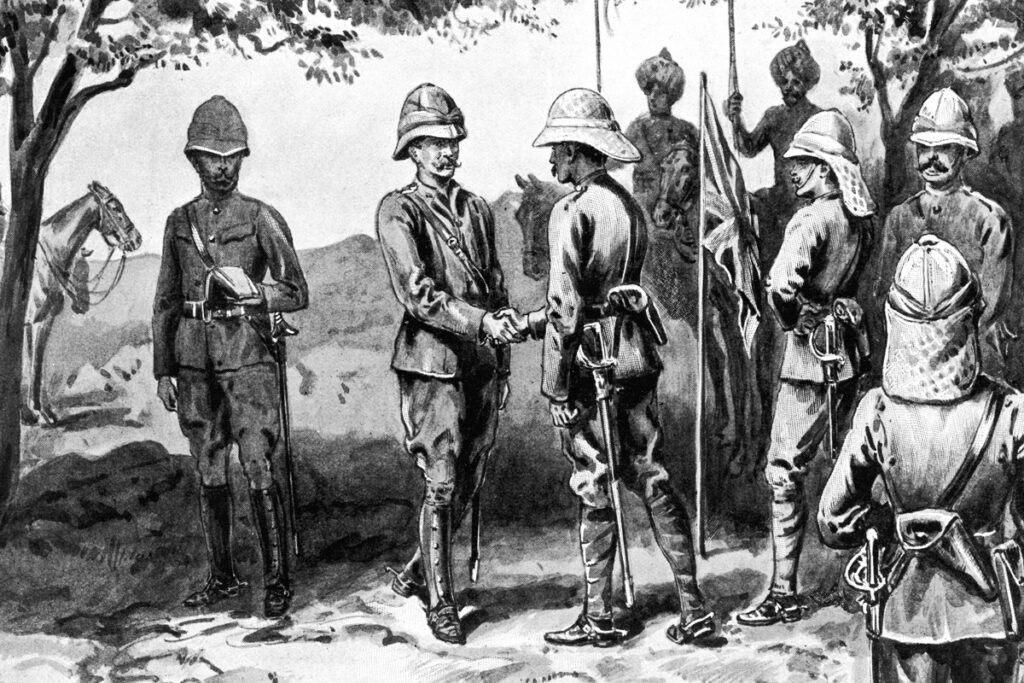
Perhaps the most familiar explanation for the handshake is that it began as a way of proving peaceful intentions. By extending an empty right hand — the one most people used to wield a sword or spear — strangers demonstrated that they carried no weapon. Some versions of the theory even suggest that the up-and-down motion evolved in order to shake loose any hidden dagger concealed in a sleeve.
It’s a compelling story, but historians caution that there’s little direct evidence proving this was the handshake’s original purpose. Instead, the gesture likely accumulated different meanings over time. A clasped hand might signify trust, confirm an oath, or mark an agreement. As historian Walter Burkert has observed, a promise spoken aloud became more meaningful when reinforced by the physical act of grasping another person’s hand.
The preference for the right hand probably also reflected practical and cultural traditions. Since most people are and have been right-handed, offering the right hand naturally placed each person’s dominant hand in full view. Religious customs likewise reinforced the convention. In both Christianity and Islam, the right hand has traditionally carried positive symbolic associations; Islamic etiquette in particular reserves the right hand for respectful interactions such as eating and greeting others, while the left is considered unclean.
The Modern Greeting
Although ancient civilizations clasped hands, many historians believe the handshake didn’t become an everyday greeting until much later.
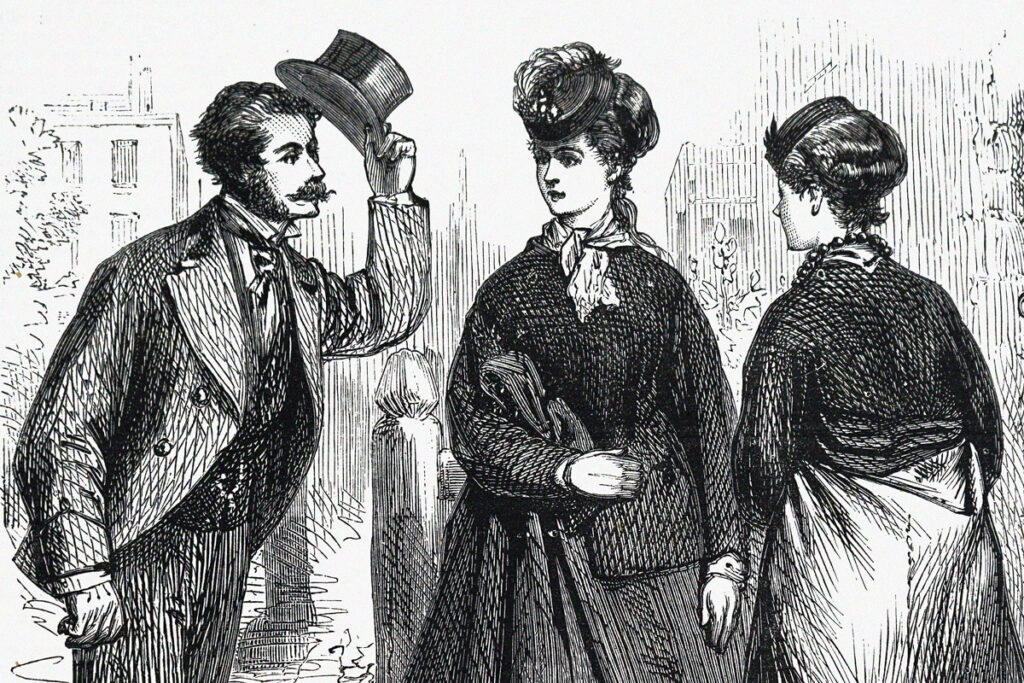
During the Middle Ages, elaborate bows, curtsies, and hat-tipping were often the preferred ways to acknowledge someone, especially in Europe’s highly stratified societies. Greetings reinforced social rank as much as goodwill.
The handshake reemerged in the 17th century thanks in part to two very different groups. One was the Society of Friends, better known as the Quakers. Rejecting social hierarchies, Quakers refused to bow before nobles or other supposed social superiors. Instead, they greeted everyone — men and women alike — with the same simple handshake, reflecting their belief that all people were equal before God.
The other champions of the handshake were merchants. As trade expanded across Europe and North America, a quick, mutual handclasp proved a practical way to establish goodwill between business partners from different regions, religions, and backgrounds. Eventually, the gesture spread beyond commerce into everyday social life.
By the Victorian era, shaking hands had become common enough that etiquette manuals devoted entire sections to doing it properly. Gentlemen were advised to keep their hands cool and dry, to remove their gloves first, not to squeeze too hard, and never to continue holding someone’s hand longer than necessary. One 1877 guide warned that anyone who “too violently shakes” another person’s hand should not be given a second opportunity.
An Unshakable Tradition
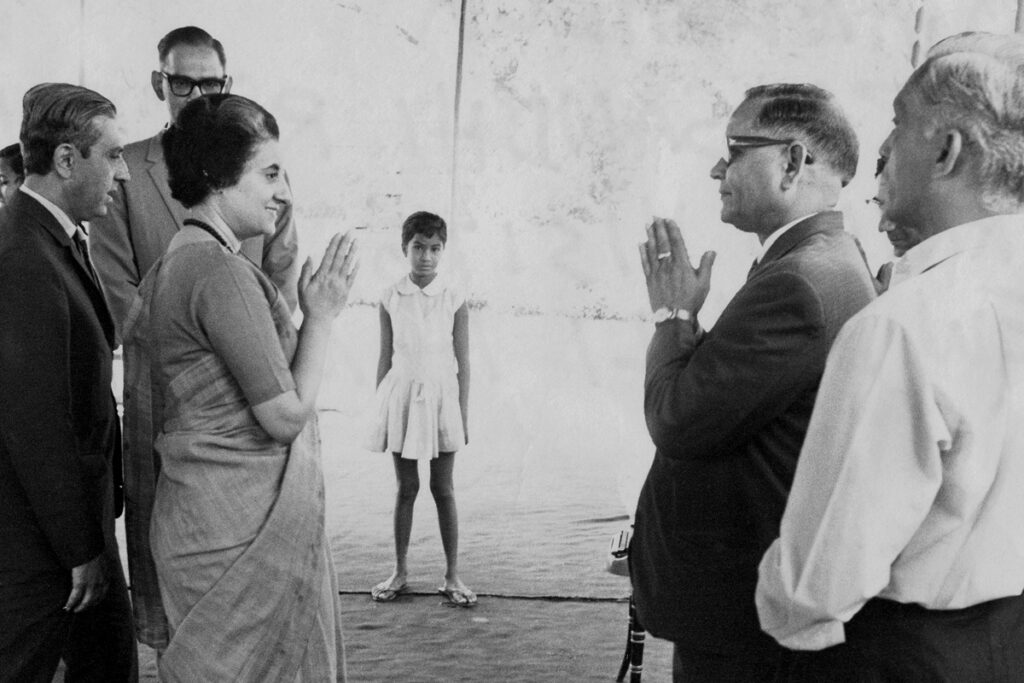
Despite its long history, the handshake has never been universal. Many cultures developed different greeting rituals. In China, a traditional greeting involves pressing one hand over a loosely closed fist. Across the Indian subcontinent, the ancient namaste gesture conveys respect by pressing the palms together and bowing forward slightly.
Meanwhile, disease outbreaks have repeatedly caused people to rethink the handshake custom. During Philadelphia’s devastating yellow fever epidemic of 1793, observers noted that acquaintances no longer shook hands, instead acknowledging one another with cautious nods. Similar advice resurfaced during the influenza pandemic of 1918, when people were urged to avoid unnecessary physical contact. More than a century later, COVID-19 once again prompted many people to swap handshakes for elbow bumps or waves.
Each time, some commentators predicted the handshake’s demise. Yet the custom has repeatedly returned, adapting to changing ideas about health, etiquette, and social equality.
Perhaps that’s the real secret behind its longevity. The handshake has endured not because it has always meant the same thing, but because every generation has found reasons to keep extending its hand.


