




Shakespeare spelled his own name multiple different ways.
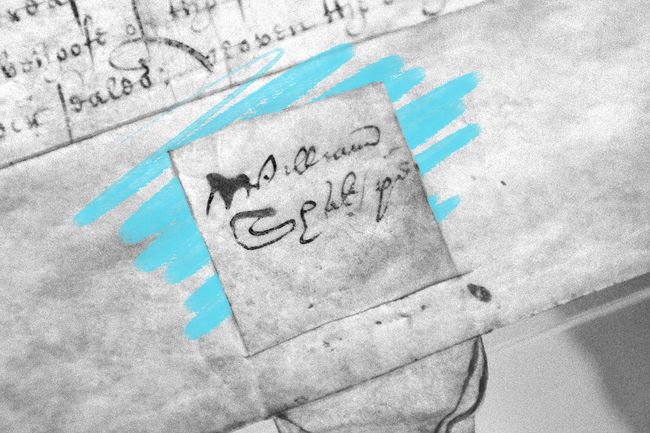
William Shakespeare may have helped shape the English language, contributing hundreds of words to our modern lexicon, but he was seemingly unconcerned with standardizing his own surname. The playwright spelled — or at least signed — his name several different ways during his lifetime; in fact, no surviving document shows him using the now-standard spelling of “Shakespeare.”
There are six surviving signatures believed to be the Bard’s, found on legal documents dating from the final years of his life. They include spellings such as “Willm Shakp,” “William Shakspe,” “Wm Shakspe,” and “William Shakspere.” The signatures are abbreviated and difficult to decipher, but they clearly aren’t identical. His name also appeared in print in dozens of different forms; early editions of his plays, for example, variously credited him as “Shake-speare” or “Shakespere.”
This kind of spelling disparity wasn’t unusual at the time. English spelling had not yet been standardized, and people often followed the sound of a word over a fixed written rule. Even highly educated people often wrote the same words, or their own name, differently from one document to the next. Clerks and printers were also frequently the ones to decide how to spell names, meaning individuals had little control over how their monikers appeared in various places.
The modern spelling of “Shakespeare,” for its part, was the most common spelling during the Bard’s lifetime and gradually became the accepted version after his death. It was helped along by the influential Cambridge Shakespeare, published between 1863 and 1866, which used the now-familiar spelling of the name.


