




Why Do Old Mirrors Have Black Spots?

If you’ve ever shopped for mirrors in an antique shop, you may have noticed small black spots scattered across the glass. Sometimes these spots appear along the edges, but others seem to float across the surface like little shadows trapped inside the mirror. They’re not scratches in the glass, and cleaning or polishing doesn’t seem to remove them. So what causes them, and why are they so common in old mirrors?

A Mirror Is More Than Just Glass
Although we think of mirrors as shiny pieces of glass, the glass is actually only the surface we look through. The reflection comes from a thin metallic coating applied to the back. When light passes through the glass and reaches this reflective layer, it bounces back to our eyes and creates the image we see.
While people had been using polished metal mirrors since ancient times, producing a mirror that could clearly reflect was a difficult and expensive process. During the Renaissance era, high-quality glass mirrors were luxury items for the wealthy; Venetian glassmakers in particular became known for producing some of Europe’s most revered pieces. At the time, these mirrors were backed with reflective — and toxic — mercury. But that began to change in the 19th century. In 1835, German chemist Justus von Liebig developed a method for applying a thin layer of silver to glass, making mirrors easier and less expensive to produce and, as a result, available to more ordinary homes.
More from our network





Losing the Reflection
Von Liebig’s discovery transformed mirror-making, but these new silver-backed pieces did have a weakness. By the early 20th century, the common silver layer on the back of mirrors was often sealed and protected with layers of varnish, shellac, or paint. But those protective coatings can break down over time, allowing moisture or small amounts of sulfur compounds in the air to reach the silver underneath.
When that happens, the silver becomes vulnerable to tarnishing or deterioration. As the reflective coating breaks down, it can no longer bounce light back through the glass, so instead of seeing a reflection, you’re looking through the clear glass to the dark backing or frame behind it. The damaged areas appear as those familiar dark spots. This corrosion of the reflective layer is known as desilvering, mirror rot, or, to some antique collectors and restorers, foxing.
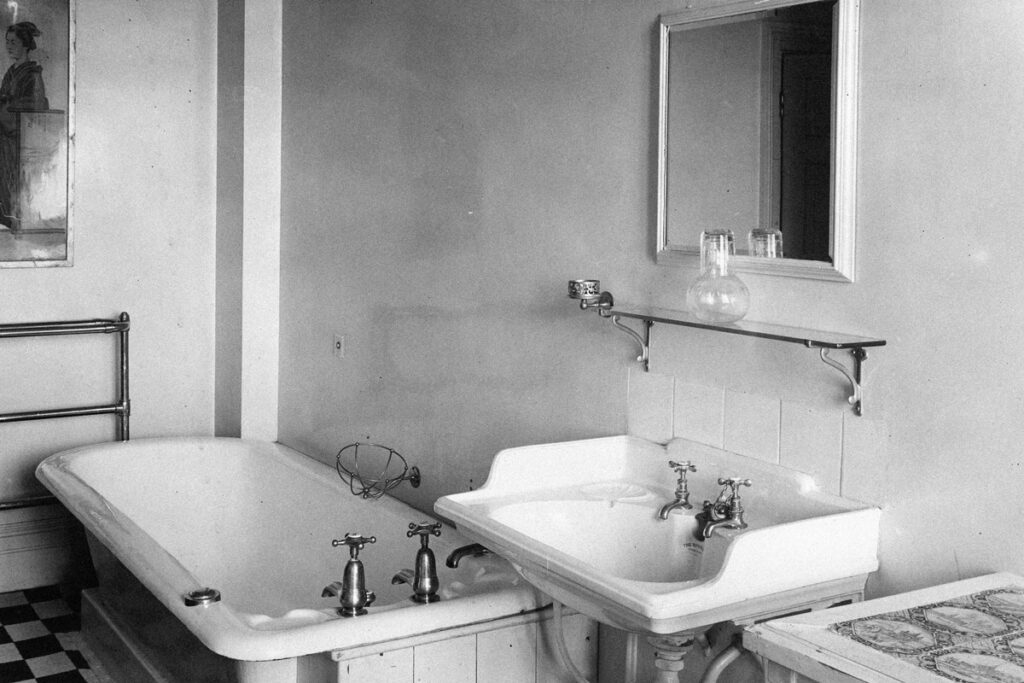
The damage typically begins around the edges, where moisture can enter most easily. Mirrors that were hung in bathrooms are especially susceptible, as years of humidity, steam, and temperature changes can slowly weaken the protective backing. Even repeated cleaning can contribute to the problem if water or cleaning products seep behind the frame.

A Spot of History
Unlike fingerprints or surface water splatters, desilvering cannot simply be wiped away. Fixing it requires a process known, perhaps unsurprisingly, as resilvering. Before mirrors became inexpensive household items, replacing one wasn’t always practical. Instead, many communities had glass shops or specialist craftsmen who removed the deteriorated backing and applied a fresh reflective coating, restoring the mirror for many more years of use.
As mass-produced mirrors became cheaper during the 20th century, resilvering gradually faded into a niche craft reserved mostly for valuable antiques. And in the 1930s, mirror manufacturers began replacing silver with vacuum-deposited aluminum, which forms a more durable reflective coating and is still used in most modern mirrors today. Still, many collectors and old-aesthetic lovers see the dark spots as touches of character and part of the mirror’s history. Some modern designers even create new mirrors that mimic desilvered antiques, while others offer DIY guides on how to achieve intentionally aged finishes.


