


One president’s son was connected to three presidential assassinations.
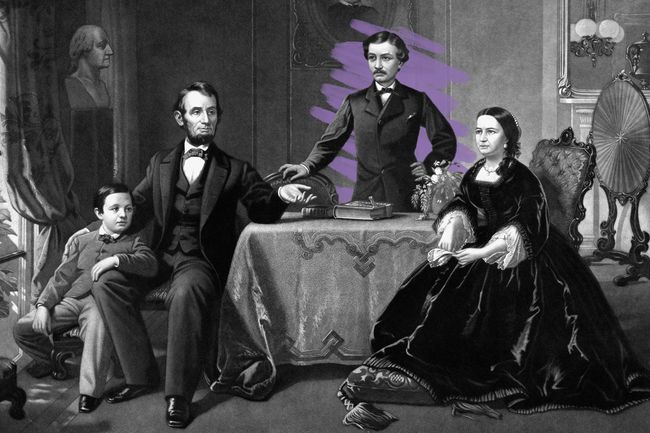
If anyone had reason to believe they were cursed, it was Robert Todd Lincoln. The eldest son of Abraham Lincoln was closely connected to three presidential assassinations over the course of his life — first his father’s, then those of Presidents James A. Garfield and William McKinley. Although later retellings have exaggerated his role, the real story is remarkable enough.
Robert narrowly missed accompanying his parents to Ford’s Theatre on April 14, 1865, declining an invitation to see Our American Cousin. (Tired, he had decided to go to bed early.) After John Wilkes Booth shot President Lincoln, Robert rushed to the Petersen House across the street, where his father had been taken. He spent the night comforting his devastated mother and was at Abraham Lincoln’s bedside when the president died the following morning.
Sixteen years later, history repeated itself. On July 2, 1881, Robert Lincoln (then secretary of war) was walking toward President James A. Garfield at Washington, D.C.’s Baltimore and Potomac Railroad Station when Charles Guiteau fired two shots. Lincoln was roughly 40 feet away and reached the wounded president within seconds, helping organize the chaotic response. Garfield died more than two months later from complications of his injuries.
In 1901, history took another uncanny turn. Lincoln and his family arrived by train in Buffalo, New York, intending to visit the Pan-American Exposition, only to be handed a telegram announcing that President William McKinley had just been shot there. Lincoln hurried to the wounded president’s bedside and visited him twice, believing he was recovering. Instead, McKinley died eight days later.
Robert himself reportedly felt there was a “fatality” surrounding his presence at presidential occasions. But historians caution against the idea of any real curse, and the idea that he was an eyewitness at all three events, as is sometimes reported. His famous name, long career in public life, and the unusually turbulent era in which he lived simply placed him in the orbit of the White House again and again — with extraordinary consequences.


