




Why Did Houses Have Parlors?
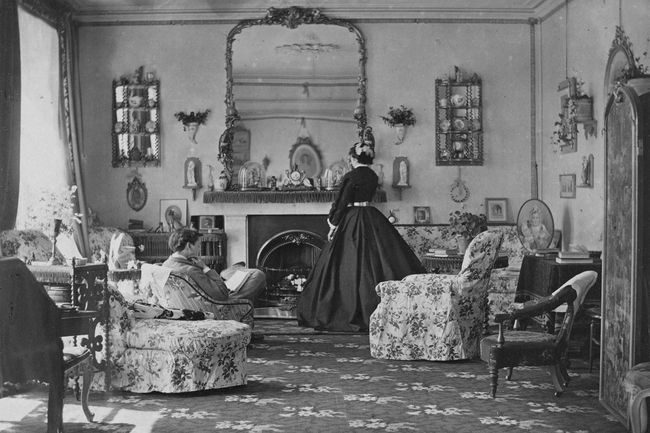
Before living rooms and family rooms, there was the parlor — a space designed less for living in than for being seen. Often pristine and a little intimidating, the room was reserved for guests, special occasions, and the careful display of a family’s taste and status. Though the term has mostly disappeared today, the parlor has a long history, from medieval monasteries to middle-class domestic life. Here’s a look back at the rise and fall of the parlor.
“Parlor” Comes From the Verb “To Speak”
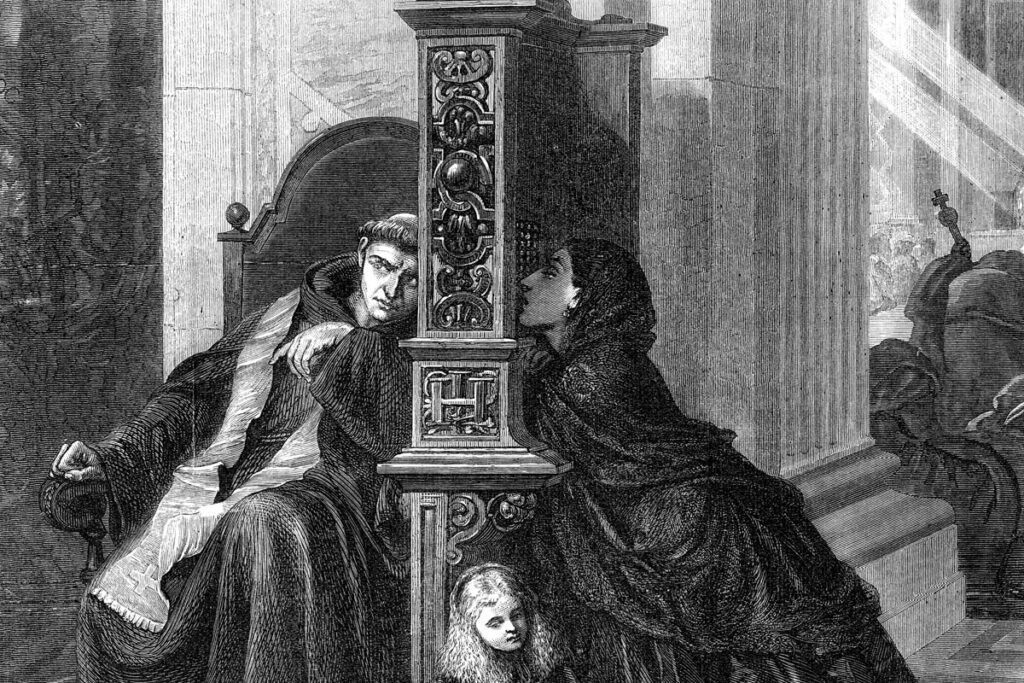
The word “parlor” has always been about talking. The term traces back to the Old French parler, meaning “to speak,” and entered English around the 13th century as “parlur” — a word that originally referred to a small window in monasteries through which priests heard confessions. The meaning then expanded to describe a designated room within a monastery set aside for conversation — a space where the otherwise cloistered inhabitants could interact with visitors or speak privately among themselves.
That dual idea — conversation paired with separation — stuck. By the late 14th century, the word had shifted beyond religious life to describe a room set apart from a great hall and offering a measure of privacy. By the 15th century, the concept had settled into domestic architecture as a room in a private home used for receiving guests or holding more formal conversations.
Sponsored Content



More from our network






The Evolution of the Parlor
The parlor’s journey from the monastery to the middle-class home mirrors broader changes in architecture and social life. In medieval Europe, most domestic life took place in a single large hall. Privacy, in the modern sense, was rare. Over time, however, homes — especially among wealthier households — began to develop specialized rooms branching off from that central space. One of these was the parlor: a smaller, more controlled environment for conversation, business, or receiving select visitors.
Early on, the parlor wasn’t always the front-and-center “best room” we tend to imagine today. In some regions, it functioned as a private chamber or even a bedroom tucked away from the main living area. Only later — by the 18th century and especially the 19th century — did it become firmly established as a formal reception room, often located at the front of the house.
That shift coincided with the rise of the middle class in Europe. As industrialization created new wealth, families increasingly sought to display their status through their homes — and specifically through rooms designed to be seen. By the Victorian era, the parlor had become a kind of stage set: a carefully curated space where the household presented its best self to the outside world.

What Was a Parlor Good For?
At its most basic level, the parlor was for receiving guests. Social calls — brief, often highly ritualized visits — were a cornerstone of life in the 18th and 19th centuries, and the parlor provided the setting. Typically located just off the entryway, it allowed visitors to be entertained without granting them access to the more private (and perhaps messier) parts of the home.
But the parlor did much more than host polite conversation. It was also a showcase. By the Victorian era, parlors were often filled — sometimes to the point of excess — with decorative objects meant to signal taste, refinement, and, above all, prosperity. Mass production made a wide array of goods available, and families eagerly filled their parlors with items such as porcelain figurines, vases, mirrors, decorative plates, and framed photographs, as well as ferns in glass cases, taxidermied birds, Japanese fans, peacock feathers, ornate clocks, and richly upholstered furniture.
Much of this work fell to women, who were typically responsible for decorating and maintaining the parlor. Their choices helped define the household’s public image, turning the room into a carefully composed expression of identity and status. Critics at the time — notably sociologist Thorstein Veblen — described this as “conspicuous consumption,” a term Veblen coined in 1899. But for many families, it was simply part of participating in middle-class life.
The parlor wasn’t always a stiff or silent place, however. It was also a center of entertainment. Before the advent of radio and television, parlors hosted a wide range of activities, from amateur theatrical performances to music and games. Families gathered around the piano to sing or dance; guests acted out charades or participated in parlor games such as Sculptor, where players froze into dramatic tableaux. More energetic pastimes — such as Blind Man’s Buff, in which a blindfolded player tried to catch others — could turn the carefully arranged room into a site of chaos. Word games, riddles, and shadow plays offered quieter alternatives, combining amusement with displays of wit and education.
And the parlor’s uses extended even further. In the 19th century, it was not uncommon for families to lay out the dead in the parlor for wakes or viewings, allowing friends and relatives to pay their respects in the home itself. Over time, however, these practices began to shift. As noted in the Oxford Research Encyclopedia of American History, changing middle-class ideas about death moved “a respectable burial from the family parlor to the funeral parlor,” unlinking mourning from the domestic space.
In all these ways — social, aesthetic, and even ritual — the parlor functioned as a kind of public-facing heart of the home.

What Happened to Parlors?
By the early 20th century, the parlor began to lose its place in everyday life. Part of the problem was practicality. Parlors were often the most elaborately decorated rooms in a house, but also among the least used. Maintaining a space that existed primarily for occasional guests could feel wasteful, especially as ideas about home life shifted toward comfort and informality.
At the same time, social norms were changing. The rigid etiquette that governed formal visits began to fade, and families increasingly preferred spaces where they could relax rather than perform. The very qualities that had once made the parlor desirable — its formality, its separation from daily life — began to make it feel outdated.
In response, a new kind of room emerged: the living room. The name itself signaled a shift in priorities. Rather than a space reserved for appearances, the living room was designed for everyday use — a place to read, talk, and unwind. Later in the 20th century, additional informal spaces such as family rooms and rec rooms further blurred the boundaries between public and private life within the home.
The word “parlor” didn’t disappear entirely, but its meaning narrowed. It lingered in business names — ice cream parlors, beauty parlors, funeral parlors — where it retained its association with receiving the public in a designated space. In homes, however, it largely faded from use.
What remains is the idea behind it: that a room can be more than just a place to sit. For centuries, the parlor was where households performed their identity — where they spoke, displayed, entertained, and even mourned. Its disappearance marks not just a change in architecture, but a broader shift in how people think about privacy, status, and the meaning of home itself.


