


What Medieval People Thought Nightmares Meant
In the medieval era, people took their dreams very seriously — and their nightmares perhaps most seriously of all. A regular dream could be pleasant and potentially interpreted as a message or a vision. But a nightmare, depending on its interpretation, could be seen as a symptom of illness or even an attack. In many cases, the perturbed dreamer would consult with a priest or physician to decipher the frightening omen. Let’s travel into the world of dreams in the Middle Ages to find out where people thought their nightmares came from, and what these visions might mean.
Suffocating Spirits
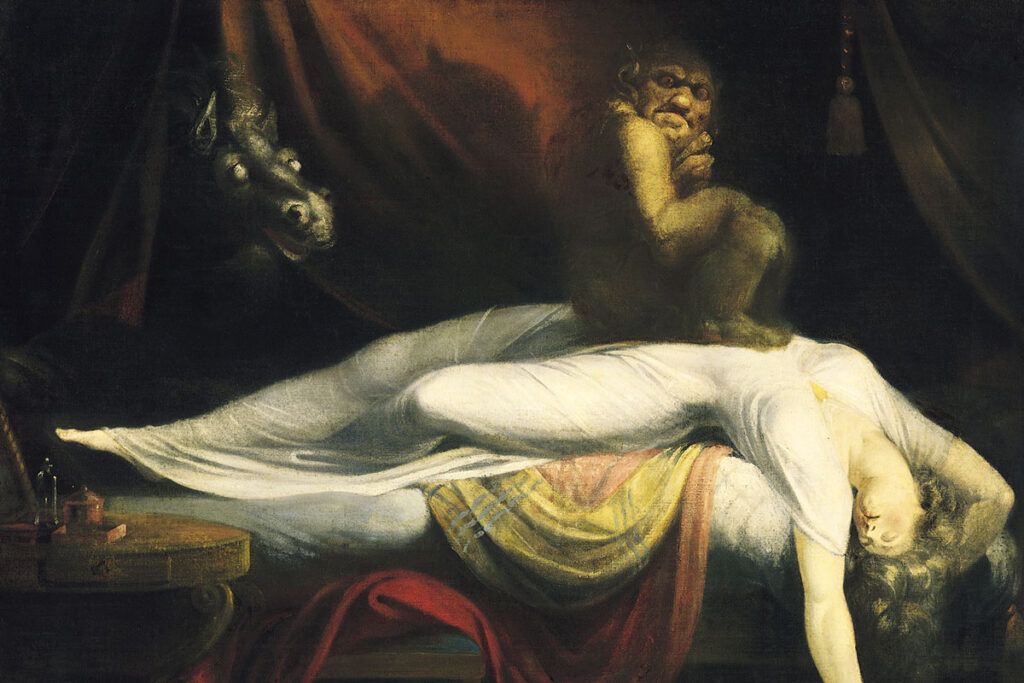
The word “nightmare” first appeared in the early 14th century. The first half of the word — “night” — is self-explanatory; it’s the second half that gives us more insight into the way nightmares were experienced and interpreted by medieval people. In this case, “mare” does not refer to a female horse, but is instead an Old English word for a goblin or evil spirit. In the 1300s, “nightmare” referred specifically to a spirit or monster that was believed to settle on a sleeping person, producing a feeling of suffocation.
The worst kind of nightmares had a specific culprit: the incubus (from the Latin word incubāre, meaning “to lie upon”). These crushing demons sat upon the chests of unwitting sleepers, causing breathing problems and, in some cases, what is now known as sleep paralysis. For many people in the Middle Ages, this was no myth or metaphor — they believed that a malignant spirit was actually pressing down on them while they slept. The existence of incubi was even recognized by medieval ecclesiastical and civil law.
In one notable case, a 12th-century knight named Stephen of Hoyland complained of attacks by a demon while he slept. During the assaults, which occurred regularly over a 30-year period, the incubus would try to crush or suffocate him. For years, he had his servants sleep nearby so they could wake him during such an attack. Eventually, a visit to the cathedral city of Canterbury cured him of his nightly terrors.
More from our network






What Doctors Thought
Not everyone in the medieval period blamed their nightmares on demons. While the general public — and, notably, theologians — often saw nightmarish symptoms as the result of visitations from incubi or other demonic entities, medieval physicians took a more measured, logical approach based on the medical beliefs of the age.
Medieval medicine was still largely based around the ancient Greek framework of the four humors, or four bodily fluids: blood, phlegm, yellow bile, and black bile. Medieval physicians linked dreams to these four humors, with disturbing dreams — along with insomnia, stress, and sadness — associated with an excess of black bile, or melancholy (which comes from the Greek melankholia, literally meaning “black bile”).
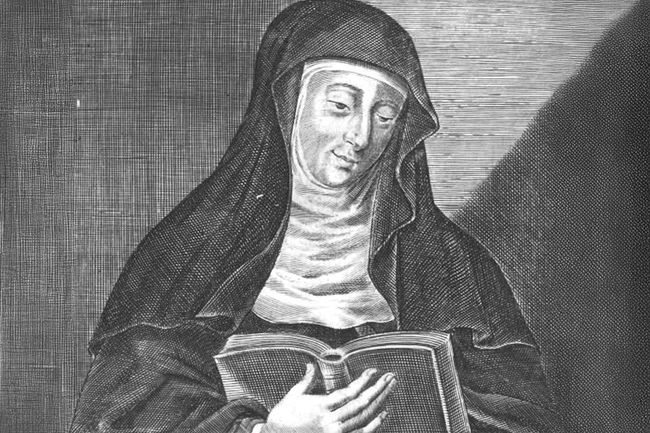
Medical experts in the Middle Ages, including the German Benedictine abbess and polymath Hildegard of Bingen, advised that an imbalance of humors could affect temperament, mood, and behavior. It was thought that an excess of the wrong substance flowing through the body could also corrupt the sleeping mind, leading to dark, frightening visions. In a letter to a priest who was suffering from nightmares, Hildegard of Bingen wrote, “Your terrifying dreams … are caused by bloody humors in conjunction with melancholia.” She also noted that while they may cause sleep to be troubled, “your dreams very often are not true.”

The Spiritual and Physiological Combined
It's important to note, however, that these two frameworks — demonic and medical, spiritual and physiological — were not necessarily mutually exclusive in the Middle Ages. Most medieval thinkers were comfortable holding both explanations at once. Hildegard of Bingen, for example, didn’t solely blame her priest’s nightmares on bloody humors, telling him that it was ultimately “by the dispensation of God that you are chastened by such an affliction.”
In the medieval period, it was believed that bad humors could make a person vulnerable to demons, and demons could worsen the humors. Prayer would often be the first remedy recommended by both theologians and physicians. Fundamentally, the physical body and the spiritual world were deeply intertwined — particularly so when it came to nightmares.


