




What Did Ancient People Do With Their Trash?
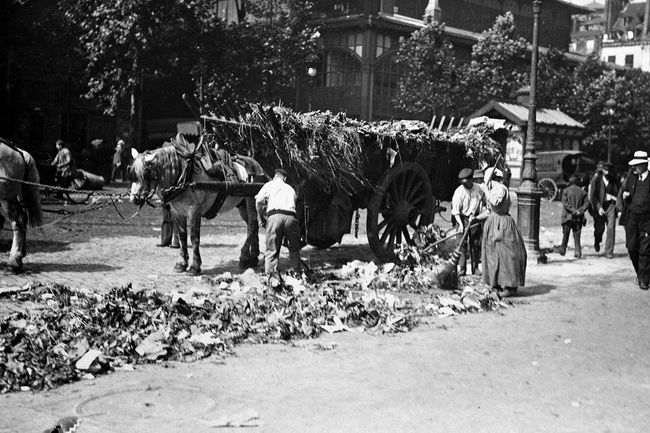
Long before curbside pickup and neatly labeled recycling bins, humans faced a familiar problem: what to do with their garbage. The answers, across ancient civilizations, were both varied and inventive — albeit often far messier than modern systems. People tossed refuse into alleyways, built their cities on top of it, and sometimes folded it back into daily life. In many cases, what we would call “garbage” wasn’t even seen as waste at all, but as a resource waiting to be reused. Here’s a closer look at how ancient societies dealt with their trash.
We Built This City on … Garbage?
One of the most common solutions wasn’t really a solution at all: throwing trash right outside the home. In Sumerian cities in Mesopotamia around 2500 BCE, residents routinely dumped waste into alleyways. Municipal workers spread ash and sand over the mess to tamp it down, but the buildup was inevitable. Over time, layers of garbage, ash, and dirt raised street levels so much that people had to add steps down into their homes.
This kind of accumulation was widespread in the ancient world. Early cities often dealt with refuse simply by piling it up nearby, creating thick layers of debris. The result is the deep, stratified tells (artificial mounds) or middens (concentrated trash deposits) that mark many ancient settlements around the globe.
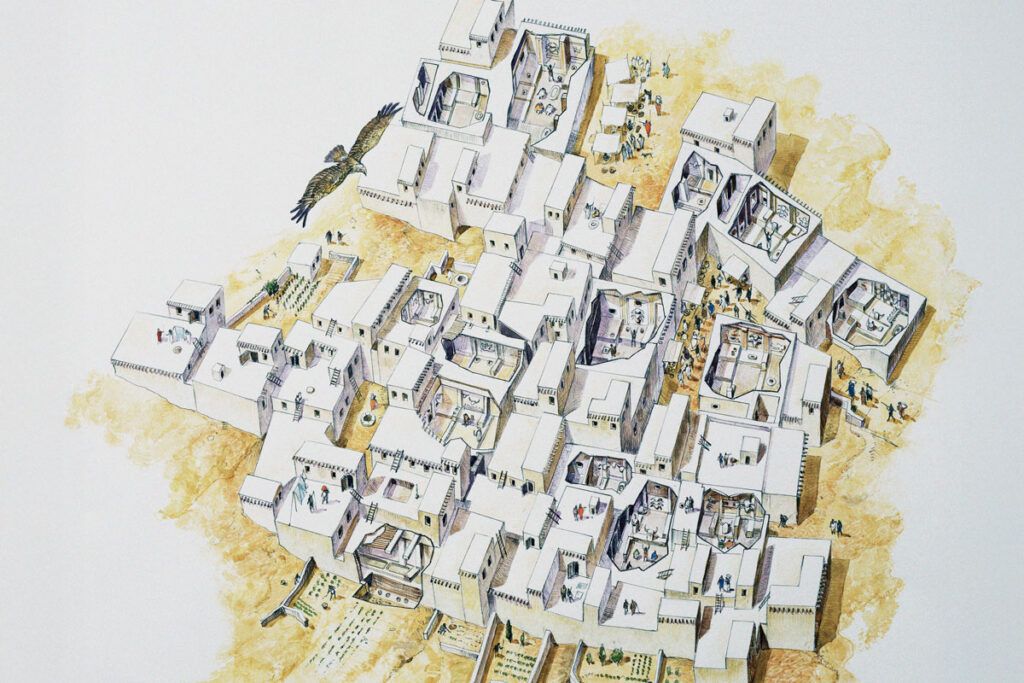
Sometimes trash actually became part of how early cities constructed themselves. At Çatalhöyük, a Neolithic settlement (abandoned 7,000 years ago) in modern-day Turkey, trash such as food scraps, ash, broken tools, and even human waste was discarded into the gaps between buildings. Over centuries, those deposits filled in the spaces, fused structures together, and created a dense, rising mound. Residents quite literally lived atop the refuse of earlier generations. In this way, garbage didn’t just accumulate — it transformed the landscape itself. As anthropologist Sarah Hill wrote, “Çatalhöyük today is not only one of the earliest known cities; it is also one of the world’s oldest landfills.”
More from our network






The First Dumps
As cities grew, some societies began to push waste farther away from the home. By about 500 BCE, the Athenians in ancient Greece had established what are often considered the first municipal dumps in the Mediterranean world. Laws required waste to be deposited at least a mile outside the city walls and banned throwing garbage into the streets.
Similar patterns appear elsewhere. In ancient Egypt, planned towns placed rubbish heaps beyond their walls, while in Mesopotamia and other regions, people concentrated refuse in designated pits, middens, and dumping grounds rather than scattering it.
But these systems were rarely tidy or consistent. Even in classical Athens and Rome — societies with laws governing sanitation — enforcement was uneven and waste still piled up in many areas. In Rome, property owners were responsible for cleaning the street in front of their homes, and while some recycling and scavenging took place, dumps outside the city grew steadily.

The Original Recyclers
Centuries before the “Reduce, Reuse, Recycle” slogan, many ancient societies routinely incorporated debris from everyday life — including broken pottery, ash, rubble, and organic waste — intro construction projects. Archaeologists have found that materials from demolished buildings and discarded goods were mixed into mud bricks, packed into earthen floors, or used as leveling fill.
In Pompeii, for example, large mounds of refuse outside the city walls were not simply trash heaps but staging areas. Materials such as plaster and ceramics were sorted and then brought back into the city to be reused in construction.
This kind of reuse was widespread and practical. Unlike today’s plastics-heavy garbage, ancient waste streams were dominated by organic and mineral materials — things that could be easily repurposed. Ash could stabilize surfaces, broken ceramics could be mixed into building materials to strengthen floors and walls, and even human and animal waste could be (and often was) used in agriculture as fertilizer or for dyeing and tanning.

From Trash to Ash
Another common strategy for ancient garbage disposal, in places such as the Andes and Mesoamerica, was burning. Fire reduced the volume of organic waste and helped control odors and pests. The resulting ash could then be reused: It was often spread over streets, incorporated into construction, or used in cleaning.
But burning trash wasn’t always purely practical. In many cultures, fire had ritual significance. Offerings to gods were often consumed in flames, transforming physical materials into smoke that rose skyward as messages to the heavens. In some cases, the line between disposal and ritual destruction blurred, with burning serving both functional and symbolic purposes.

The First Sewers
When human waste wasn’t just deposited nearby or collected for reuse, it was sometimes flushed away. About 4,000 years ago, the Minoans of Crete were among the first to dump their sewage into water. They developed remarkably advanced plumbing systems and what might be the first flush toilets. At the palace of Knossos, rainwater was collected and used to flush several toilets in the east wing, carrying sewage through ceramic pipes into underground channels. These systems even included manholes for maintenance — a strikingly modern touch.
In the Indus Valley, cities such as Mohenjo-daro and Harappa (both in modern-day Pakistan) built extensive drainage networks during their peak in the third millennium BCE. Houses had bathrooms and toilets connected to covered street drains, with carefully sloped channels and cesspits designed to prevent clogging. Wastewater flowed out of homes and into larger systems, helping to keep living spaces relatively clean.
Later, the Romans scaled these ideas up dramatically. The Cloaca Maxima, one of the earliest large sewer systems, carried enormous volumes of waste out of Rome and into the Tiber River. Public latrines and flowing water created a shared sanitation infrastructure — though not necessarily a hygienic one. These systems didn’t necessarily solve the problem so much as relocate it: Waste disappeared from sight and smell but often ended up contaminating water sources downstream.

Living With Waste — and On Top of It
Despite these varied strategies, one thing is clear: Ancient people lived much closer to their waste than most of us would tolerate today. Garbage accumulated in streets, between homes, and beneath floors. It was reused in buildings, dumped just beyond city walls, or flushed into nearby waterways. Even where sophisticated systems existed, they were limited by maintenance, scale, and an incomplete understanding of disease.
And yet, there is a crucial difference between ancient trash and modern waste. Most ancient refuse was biodegradable or inert. Food scraps decomposed, ash dispersed, and even broken ceramics eventually blended into the soil. That meant waste could be absorbed, repurposed, or transformed in ways that are far more difficult today.
In fact, many ancient cities were quite literally built from their own discarded past. Layer upon layer of debris became the ground beneath new construction — a process repeated across millennia. What began as refuse became real estate. It’s a reminder that trash has always been part of human life. What has changed is not the problem itself, but the materials we leave behind — and how long they stick around.


