




The Way People Slept 300 Years Ago Would Horrify You
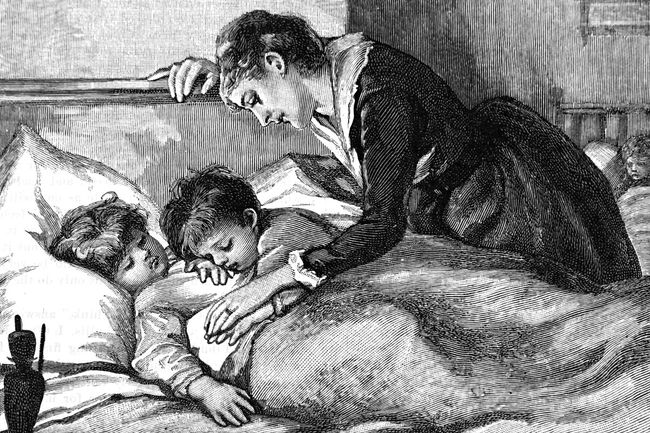
Today, it’s common to complain of a lack of sleep; in some circles, it’s almost a badge of honor. Work and family obligations, not to mention endless digital distractions, often cut into our shut-eye. It’s easy to assume that we’re more poorly rested than our ancestors, who surely slumbered deeply and peacefully without all those glowing screens — right? Well, wrong.
Good Night — and Good Luck With the Bugs
The first problem was the beasts, both big and small. Before climbing into bed, families often conducted a nightly hunt for fleas, lice, and bedbugs, combing through bedding in a somewhat futile attempt to reduce the itching to come. Straw mattresses and shared blankets were ideal habitats for parasites, and the presence of dogs and livestock only made things worse.
And we’re not kidding when we say livestock. In many rural households, animals were brought indoors at night for warmth and protection from predators and theft. Chickens, goats, and even cows might share the same space — along with all the noise, smells, and bugs they carried. (Speaking of smells, some families in East Anglia reportedly placed lumps of cow dung at the foot of the bed to ward off gnats, a solution that likely traded one problem for another.)
Even without animals, nighttime was anything but peaceful. Poor insulation meant drafts crept through walls and floors; open chimneys carried in soot and smells; chamber pots added their own aroma. From outside came the sounds of barking dogs, croaking frogs, and passing carts. Inside, every cough, snore, and shift of a bedmate was impossible to ignore.
More from our network






Sharing (Beds) Is Caring
For most people, sleep was also a communal activity. Beds were valuable — sometimes one of the most expensive items a household owned — and they were rarely reserved for just one person. Entire families might pile into a single bed, often joined by visitors. In inns or when traveling, sharing a bed with a stranger was standard practice.
This arrangement came with its own etiquette. In a family home, women usually slept toward the wall to keep them safe from intruders, with men and visitors closest to the door. Bedfellows were expected to lie still, keep to their side, and avoid hogging the covers. Not everyone succeeded. Samuel Pepys, the 17th-century English diarist, even ranked his bedmates based on their conversation and behavior.
Famous American figures weren’t exempt, either. In 1776, John Adams and Benjamin Franklin shared a bed at a crowded inn, arguing over whether to keep a window open — Adams feared catching cold, while Franklin insisted fresh air was good for one’s health — until Adams finally fell asleep mid-lecture.

Night, but Make It Hazardous
Before habits changed between roughly the 15th and 17th centuries, many Europeans slept on simple straw pallets laid on dirt floors. Even later, poorer households continued to rely on mattresses stuffed with straw or rags. In parts of Scotland and Ireland, entire families slept on floors strewn with rushes or heather.
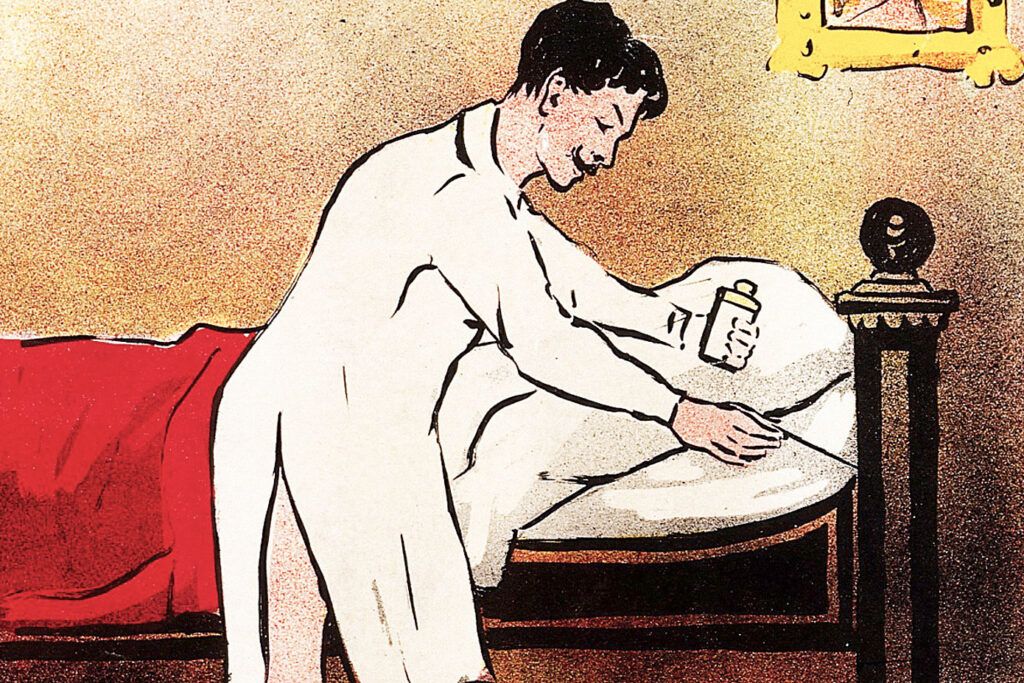
Winter brought another challenge: the cold. Without central heating, beds could be freezing. People used bed warmers — pans of hot coals or heated stones wrapped in cloth — to take the edge off, though these came with obvious risks. And fire was a constant concern. A stray spark from a candle or hearth could quickly ignite thatched roofs, wooden beams, or straw bedding, turning a quiet night into a disaster.
Night air itself was widely thought to be dangerous, leading people to wear caps in bed or even cover their faces outdoors. Meanwhile, fears of burglary meant going to bed was often described as “shutting in,” a defensive act in a world where darkness provided cover for thieves — and, many believed, for witches, spirits, and other supernatural threats prowling about in the night.

When People Slept in Shifts
As for those unbroken eight hours of shut-eye we imagine in the past? Far from it. For centuries, many people slept in two distinct phases: a “first sleep” and a “second sleep.” After a few hours of rest, they would wake naturally in the middle of the night and remain awake for an hour or two before returning to bed.
This interval — sometimes called “the watching” in English — wasn’t considered a problem. People used the time to pray, reflect on dreams, chat, do light chores, or even visit neighbors. Some medical texts suggested it was an ideal time for intimacy, when the body was relaxed.
Historian A. Roger Ekirch has uncovered hundreds of references to this pattern across diaries, literature, and legal records, not just in Europe but around the world. Later studies have found similar nighttime wakefulness in places such as Madagascar, where people often wake briefly after midnight and nap frequently during the day.
Not everyone agrees on how universal segmented sleep was, but there’s growing evidence that it was widespread — and that our bodies may still be wired for it. In the 1990s, a sleep experiment conducted in extended darkness found that participants naturally fell into a two-part sleep pattern, with a calm, meditative waking period in between.

How Night Transformed
So what changed? Beginning in the 17th and 18th centuries, the conditions around nighttime, and our ideas about it, evolved. Street lighting, coffeehouses, professional police, and a growing culture of evening entertainment encouraged people to stay up later, while the Enlightenment helped banish the associations between nighttime and evil.
By the 19th century, consolidated sleep was the norm, at least outside rural areas — and by the 20th century, the idea of waking in the middle of the night had shifted from normal to problematic.
All of which is to say: However restless your nights may feel, they’re probably still an improvement. Your bed likely isn’t crawling with lice, doubling as a livestock shelter, or shared with a traveling stranger. Modern sleep may not be perfect — but compared to 300 years ago, it’s practically a dream.


