


Easter was banned in early America.
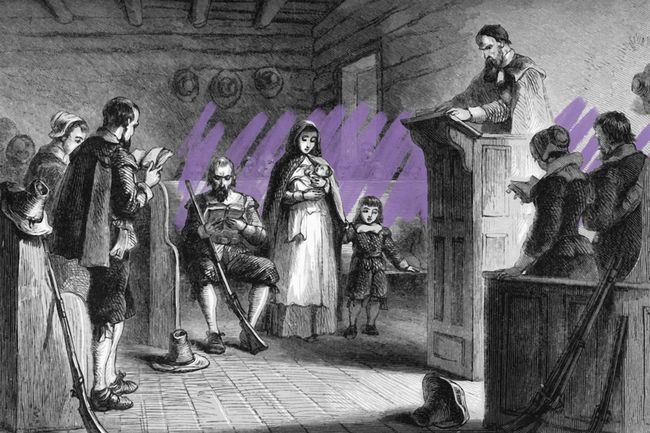
“They for whom all days are holy can have no holiday,” the Puritans liked to say, which helps explain why Easter was banned in the Massachusetts Bay Colony. (It also wasn’t widely celebrated in other parts of colonial America, including Jamestown, where it was observed with little fanfare.) The Bible didn’t mention holidays, the Puritans reasoned, so even one like Easter — which commemorates the resurrection of Jesus Christ and is perhaps the holiest day in all Christianity — was verboten.
The Puritans likened such celebrations to paganism, to which they wanted to remove all references. Christmas was banned alongside Easter in 1659 in Massachusetts, with the law stating that people caught observing the holidays “either by forbearing of labour, feasting, or any other way … shall pay for every such offence five shillings, as a fine to the county.”
The Puritans first arrived in New England in the early 17th century, settling around what’s now Boston. They believed that only “the elect” would be chosen for salvation and that most people would be damned, leading them to be as stringent as possible in their religious practices. Because Easter is always observed on a Sunday, banning it caused a problem for preachers delivering sermons on what would have been Easter Sunday — a pickle often solved by simply talking about something else.


