




Things You Didn’t Know About 7 Famous Paintings
Whether you love wandering through museums or only studied art back in school, chances are you recognize many of the world’s most iconic paintings on sight. These images appear everywhere — on posters and calendars, in movies and magazines, on book covers and social media feeds. History’s most famous paintings are reproduced so widely that most of us encounter their images hundreds or even thousands of times over the course of our lives, even if we never see the originals in person.
With so much exposure, it’s hard to be surprised by these works. But many masterpieces contain little-known stories that can permanently change how we see them. Here are surprising facts about some of the most recognizable paintings in Western art.
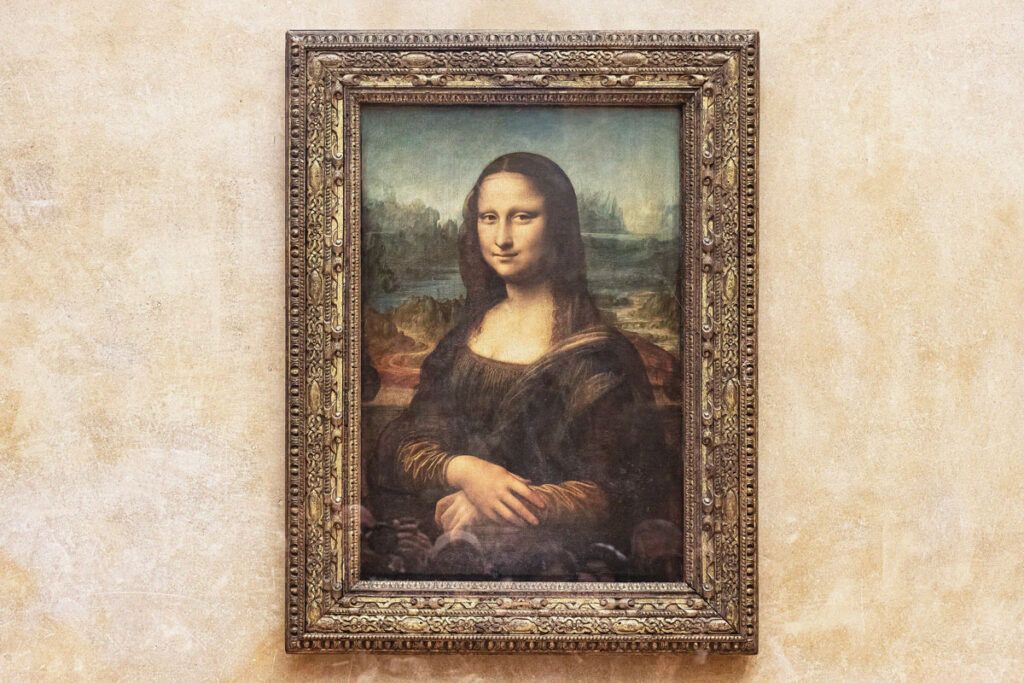
“Mona Lisa” Wasn’t Her Name
Mona Lisa isn’t the name of the woman in Leonardo da Vinci’s famous portrait. “Mona” is a shortened form of Madonna, meaning “lady” in Italian, and the sitter is widely believed to be Lisa del Gherardini, the wife of Florentine silk merchant Francesco del Giocondo. The painting’s name, then, simply means “Madam Lisa.” The title likely emerged as a respectful way to identify the subject rather than a personal name, a convention common in Renaissance Italy.
Leonardo’s careful sfumato technique is a major reason the portrait became so enduring. By layering thin, translucent glazes of paint, he created the famously elusive smile, which seems to shift depending on the viewer’s angle and focus. Rather than depicting a single fixed expression, Leonardo designed an expression that subtly changes with human perception — and that face has fascinated audiences for more than five centuries.
More from our network






The Couple in “American Gothic” Aren’t Husband and Wife
Grant Wood’s “American Gothic” has become one of the most recognizable images of rural American life, and it’s easy to assume that the stern-looking pair are husband and wife. In reality, Wood intended them to represent a farmer and his adult daughter. The models were his sister, Nan, and his dentist, Byron McKeeby, chosen for their striking, angular features. By leaving their connection deliberately ambiguous, Wood created a tension that continues to shape how viewers interpret the painting.
When “American Gothic” debuted in 1930, many Iowans took offense, reading it as a bleak satire of rural life. Wood insisted he meant it as a sincere tribute to Midwestern character, but the painting’s lasting power lies in its uncertainty — a portrait that can appear either affectionate or critical, depending on who is looking.

“The Starry Night” Was Painted From Memory
When Vincent Van Gogh painted “The Starry Night” in 1889, he was living inside a psychiatric asylum in southern France, where he had voluntarily committed himself following a mental health crisis. Confined to the hospital grounds, he worked largely from memory and imagination, transforming the limited view from his barred window into one of the most recognizable skies in art history.
The quiet village in the foreground of “The Starry Night” was not visible from Van Gogh’s room and appears to be largely invented, shaped more by memory and emotion than by the actual landscape around him. The dramatic whorls of the sky, long seen as purely symbolic, have been compared by scientists to mathematical patterns found in turbulent flow — phenomena formally described decades after the painting was made. Whether intentional or instinctive, Van Gogh’s brushwork captured a natural rhythm that science would only later begin to explain.

“The Last Supper” Began Falling Apart Almost Immediately
Leonardo da Vinci’s “The Last Supper” is one of the most reproduced religious images in history — yet surprisingly little of the original surface remains. It was painted on the wall of the refectory of the Convent of Santa Maria delle Grazie in Milan, and Leonardo did not use traditional fresco, which required painting quickly on wet plaster. Instead, he experimented with a slower, experimental technique that allowed him to rework details and facial expressions. The paint failed to properly bond with the wall, and the image began deteriorating within just a few years of its completion.
What visitors see today is the result of centuries of repair and restoration layered over the fragile remains of Leonardo’s original work. Wars, humidity, pollution, and repeated retouching further compromised the surface, leaving conservators to stabilize rather than truly preserve the paint. While modern restoration efforts have carefully reconstructed missing sections, experts agree that just 20% of what is visible today reflects Leonardo’s original brushwork.

“Girl With a Pearl Earring” Isn’t Really a Portrait
Johannes Vermeer’s “Girl With a Pearl Earring” is not a traditional portrait of a specific individual, but a tronie — a Dutch Golden Age character study that emphasizes expression, costume, and lighting rather than identity. The girl’s exotic turban and luminous earring enhance the painting’s drama, turning her into an idealized, timeless figure rather than a known sitter. Tronies were popular among Dutch artists as a way to experiment with light, color, and facial expressions, and Vermeer’s work exemplifies this approach.
Even the pearl itself may not be a real gemstone. Its simplified brushwork and reflective highlights suggest it could be glass, metal, or even a painterly effect designed to catch light and draw attention to the girl’s gaze. Vermeer’s true focus was the interplay of light and shadow across the subject’s face and costume, using the earring as a visual anchor that emphasizes her expressive look.

Seurat Used Color Science To Paint “La Grande Jatte”
Georges Seurat’s “A Sunday Afternoon on the Island of La Grande Jatte” may look serene, but it was constructed based on scientific color theory. Influenced by scholars such as Michel Eugène Chevreul and Ogden Nicholas Rood, Seurat applied thousands of tiny dots of pure, unmixed pigment side by side, letting the viewer’s eye optically mix them at a distance. This method, called pointillism, forms the basis of neo-impressionism, a movement Seurat helped pioneer that emphasized luminous color, systematic technique, and scientific principles in painting.
The resulting scene feels controlled and still, despite depicting leisure in a Paris park. Figures are arranged with geometric precision and rarely interact, giving the painting a formal, almost frozen quality. Scholars interpret this composed stillness — along with the meticulous technique — as a reflection of modern urban life, social order, and the tension between observation and human isolation in late 19th‑century Paris.

“Christina’s World” Depicts Life With Disability
At first glance, Andrew Wyeth’s “Christina’s World” may appear to show a woman resting in a sunlit field, but the story behind the image is far more compelling. The painting depicts Anna Christina Olson, a lifelong resident of Cushing, Maine, who lived with a degenerative muscular disorder that left her unable to walk by her mid‑20s. Rather than use a wheelchair or other mobility aid, Olson pulled herself across the ground using her arms.
Wyeth and his wife Betsy were close friends with Christina and her brother Alvaro, and Wyeth spent decades capturing their world in drawings, watercolors, and tempera. While Wyeth’s painting reflects Christina’s lived experience, the torso and youthful form in the painting were modeled by Betsy — a choice that has sparked some debate over authenticity and the ethics of representing another person’s body in place of the subject’s own.


