




The Mississippi River once flowed backward for several hours.
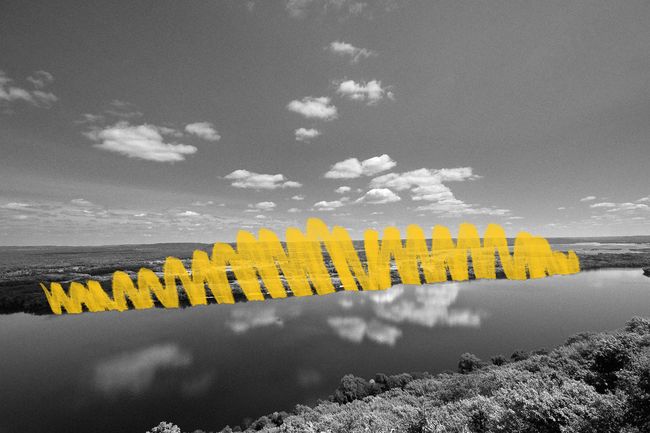
As a general rule, rivers flow forward (which is to say, downhill) rather than backward. The mighty Mississippi is no exception, and yet a February 7, 1812, earthquake near New Madrid, Missouri, was so severe that it caused enough tectonic uplift under the river that it flowed backward for several hours. It was the most violent in a series of tremors that began in December of the previous year. Known as the New Madrid Earthquake Sequence, the tremors were the most powerful seismic event east of the Rockies in U.S. history.
The magnitude is estimated to have been 8.6 on the Richter scale, which occurs only once every year or two. For comparison, there are millions of earthquakes that measure 2.5 or less every year, 350 measuring from 5.5 to 6.0 annually, 100 that measure 6.1 to 6.9, and just 10 to 15 that hit between 7.0 and 7.9. The 8.6 earthquake knocked people off their feet, created so much rolling in the earth that it induced nausea, and destroyed Little Prairie, Missouri. Ten lakes were formed, church bells rang 1,300 miles away in Boston, and President James Madison even felt it in the White House.


