




Gargoyles on churches were originally drain pipes.
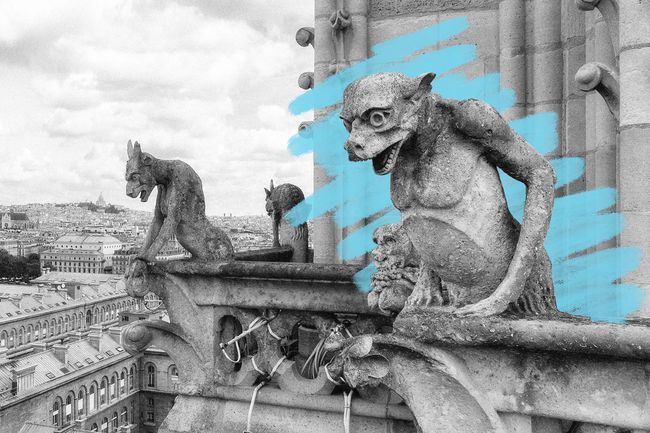
If you’ve ever wondered whether gargoyles serve a function beyond looking cool in a vaguely sinister way, just check the etymology. The word “gargoyle” comes from the Old French gargole, meaning “throat” or “carved downspout” — a hint toward their original purpose as decorative water spouts that divert rainwater from rooftops. It’s no coincidence that “gargoyle” sounds like another word: “gargle.” Gargoyles that don’t drain water technically aren’t gargoyles at all but grotesques, a distinction that has largely been lost over the centuries as “gargoyle” has become a catchall term for stone figures carved into buildings.
The same Old French root gave rise to La Gargouille, a legendary dragon from French folklore that wreaked havoc across Rouen by spewing water and flooding the city. Legend holds that after La Gargouille was burned at the stake, his head remained unscathed. The townsfolk, making the best of an odd situation, decided to put the dragon’s head on their church to ward off other beasts who would do them harm — likely reinforcing the modern image of a gargoyle.
Gargoyles are older than their name, however, and are believed to date back to antiquity; lion’s-head statues that spout water have been found in ancient Rome, Egypt, and Greece. The medieval gargoyles of Notre-Dame are especially well known, though many of them were lost in the 2019 fire that destroyed much of the iconic cathedral. Those that remain have come to symbolize the landmark’s centuries of resilience as they continue to watch over it.


