




The first microwave ovens were about 6 feet tall.
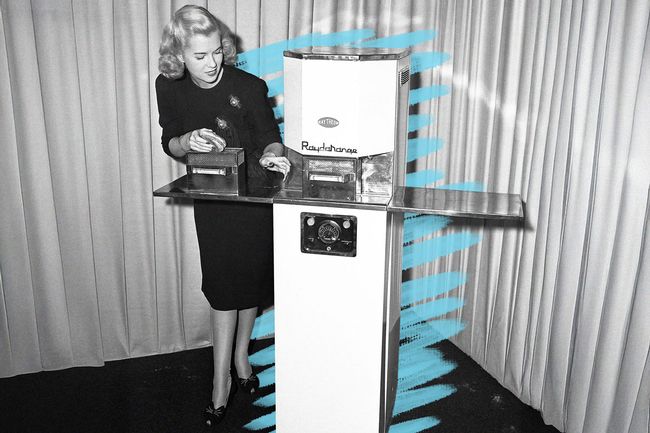
Microwaves are near-ubiquitous in American kitchens today and come in all kinds of sizes, including itty-bitty ones designed to fit in dorm rooms. But when they were first invented, these appliances were anything but space-saving.
The invention of the microwave sprang directly from the invention of the cavity magnetron, a microwave-generating component in radar systems used in World War II. One of the scientists working on these devices was Percy Spencer, who dropped out of school at age 12 and taught himself calculus and physics while serving in the U.S. Navy during World War I. When he worked at the technology company Raytheon during World War II, Spencer’s innovations included manufacturing radar components more efficiently.
Not long after the war ended, Spencer was testing some equipment when he noticed a candy bar in his pocket melted when he got too close to magnetrons. After some further experiments, he and his colleagues realized that enclosing food in a metal box before exposing it to microwaves would trap the energy, allowing for very fast cooking.
In 1945, Spencer filed his patent for the first microwave using a water-cooled magnetron, but it wasn’t practical for a home kitchen. The Radarange, as it was known, was 6 feet tall, weighed 750 pounds, and cost about $5,000 — a steep price for a microwave even now, and in 1946 that was the equivalent of more than $75,000. At first, the product was marketed to and adopted by only commercial kitchens, including restaurants, hotels, cafeterias, and ships. A smaller, relatively cheaper wall unit, which debuted in 1955, didn’t catch on for home use, either. It wasn’t until the 1967 debut of the Radarange RR-4, a countertop model with a price tag of $495, that microwaves made their way into home kitchens.


