


Maya Angelou was one of San Francisco’s first Black female streetcar conductors.
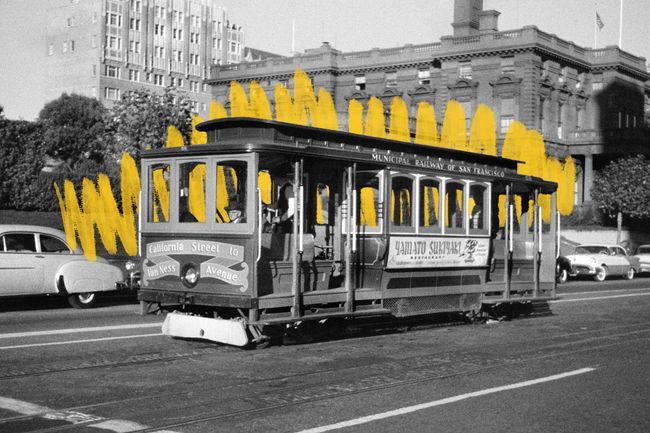
As a teenager during World War II, Maya Angelou took a job that might seem unexpected for the future renowned author: working as a streetcar conductor in San Francisco. She was just 15 years old when she climbed onto the back platform of an electric streetcar in 1943, wearing a tailored blue uniform and a change belt, collecting fares and urging riders to move forward.
Angelou later described herself as San Francisco’s first Black streetcar conductor, including in her 1969 autobiography I Know Why the Caged Bird Sings. While the claim is often repeated, later research suggests the full picture is more complex. At least one Black man had been hired by the city’s transit system earlier, in 1941. And because employment records from the era were discarded long ago, it’s difficult to prove definitively that Angelou was the first Black female streetcar conductor. But she was certainly among the very first.
Getting the job took determination. After seeing an ad for female conductors placed by the Market Street Railway Company during the labor shortages of World War II, Angelou went to apply — and was repeatedly refused an application. Encouraged by her mother, Vivian Baxter, she returned day after day for about two weeks, arriving before the office staff and waiting them out. When she was finally allowed to apply, Angelou lied about her age, writing down 19. She also invented prior work experience, saying that she had been “companion and driver for Mrs. Annie Henderson (a White Lady) in Stamps, Arkansas.”
Angelou worked the job for roughly five months before returning to high school. To keep her daughter safe on predawn routes, Baxter reportedly followed the streetcar in her own car, a pistol on the seat beside her. Angelou later said the experience taught her something lasting: With persistence and courage, she could go anywhere.


